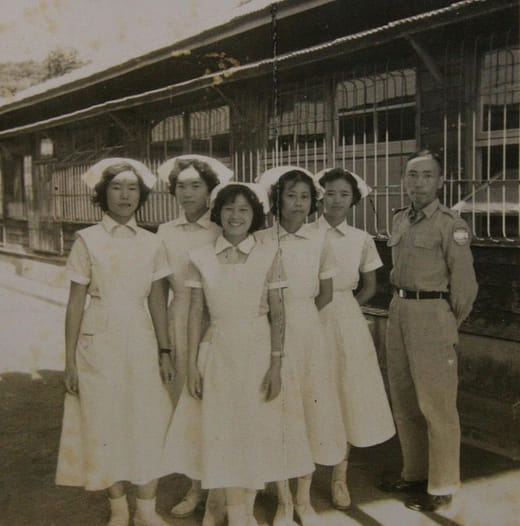
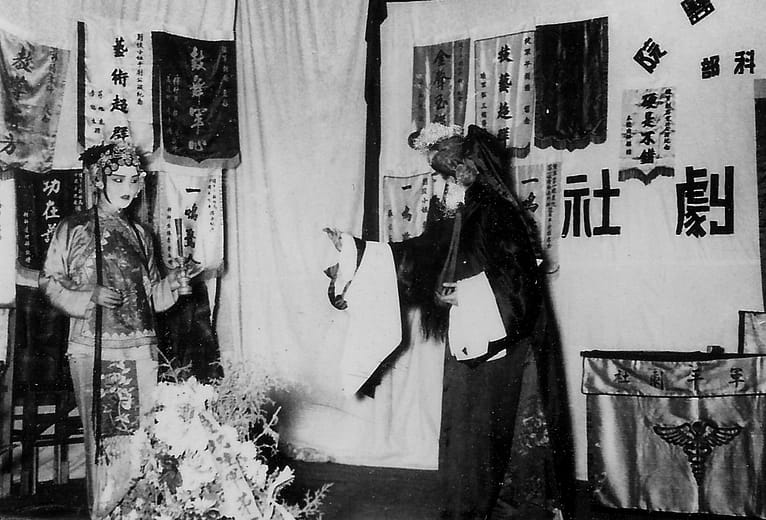
When the hospital next to Heart Village was just established, they faced a shortage of medical personnel. To address this issue, they rotated personnel from other military units or made effort to recruit new doctors, nurses and various support staff. They also invited the recovered soldiers to work at the hospital. The medical staff were quite diverse in terms of gender and background. In addition to doctors, there were female nurses who enlisted in the army in Mainland China, overseas Chinese nurses from the Philippines, as well as workers without medical backgrounds but were trained to assist with cleaning and disinfection in surgery.
Selling Blood for Tuition Fees
In the early 1950s, due to the lack of commercial activities in Taiwan, and the hospital’s need for blood supply, selling blood became a quick way to make money for the villagers. Whenever a surgery was scheduled, the operation room would have someone ask them whether they wanted to sell blood. 500 c.c. of blood could bring them NT$2000, which was a significant sum considering that the salary of working in the hospital was around NT$300 to NT$500. Some families, before they needed to pay for something expensive like tuition fees, would choose to earn some extra money with this method.
The Morgue in Children’s Eyes
During the August 23rd Artillery Battle in Kinmen, many soldiers, burned and wounded by the bomb blast, were brought to the hospital. Five to six people had to share a small ward and the corridors were crowded with patients waiting for beds.
While adults were tirelessly caring for the wounded day and night, children had a very different perspective. At that time, mischievous kids would dare each other to open the door of the morgue. They also witnessed soldiers carrying fallen comrades covered in white cloth, and hearing their family cry.