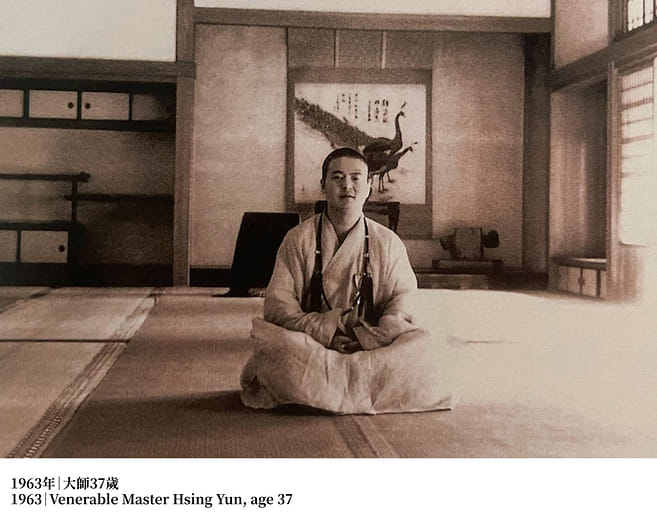
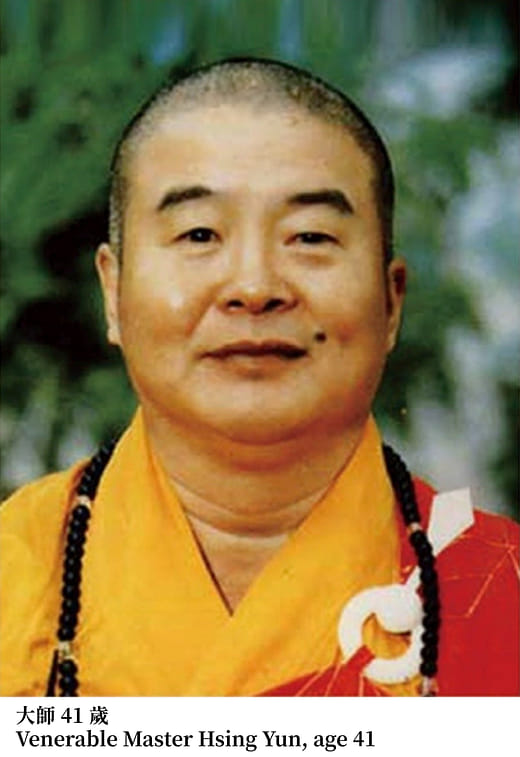
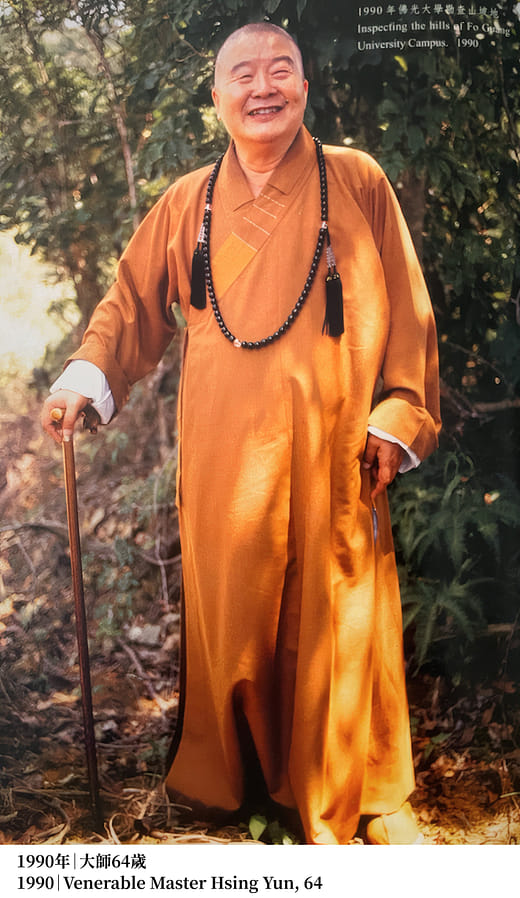
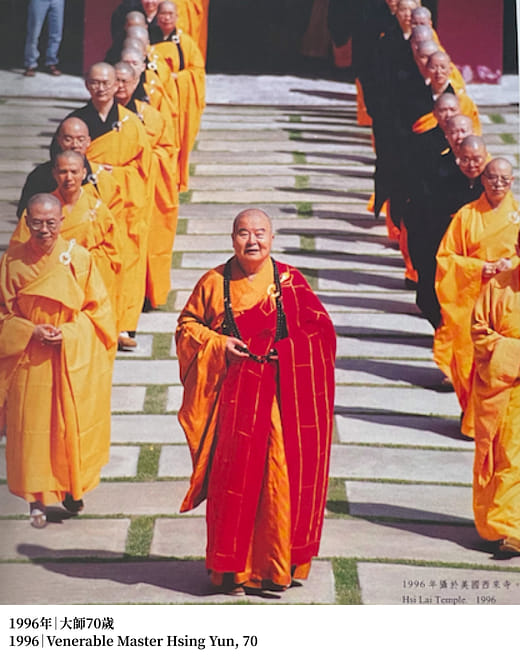
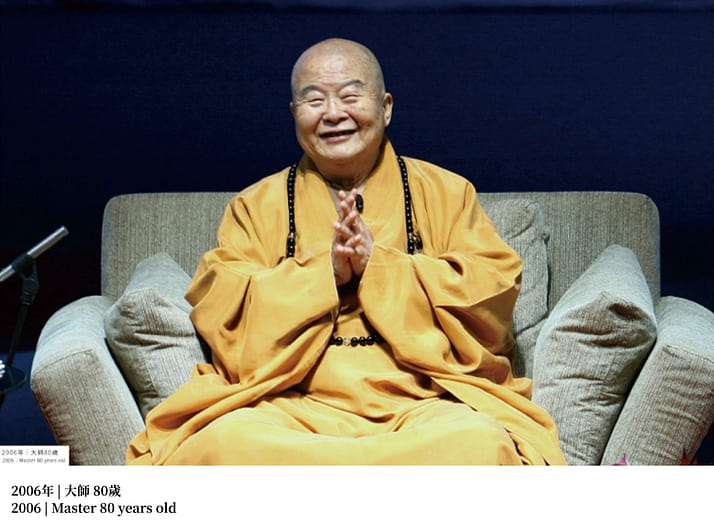
In the Venerable Master's 50s, he dedicated much of his time to supervising Fo Guang Shan's major constructions. Ever since he began fundraising for Shou Shan Temple, Venerable Master had shown great emphasis to art and culture. At age 57, he built the Buddhist Cultural Museum to display items purchased during his Dharma propagation tours around the world. At 58, in order to improve health care services in remote areas, he founded the Fo Guang Shan Medical Team, which regularly visited those areas to provide free medical consultations.
1975
The first Fo Guang Shan Devotees’ Gathering was held, setting a precedent for Buddhism.
1976
Published academic research journal—Fo Guang Journal of Buddhist Studies.
1977
Fo Guang Medical Clinic at Shou Shan Temple was relocated to Fo Guang Shan and renamed Fo Guang Clinic.
The Fo Guang Shan Buddhist Canon Committee was established.
Commencement of Pu-Men High School’s first semester.
Triple Platform Full Ordination Ceremony was first conducted at Fo Guang Shan.
December,1977
Inauguration Ceremony of Fo Guang Shan’s Main Shrine.
December, 1981
Inauguration of FGS Buddhist Cultural Artifacts Exhibition Hall.
1983
Fo Guang Shan Medical Team was established, delivering healthcare services to remote areas.
1984
Kaohsiung Pu Hsien Temple started Urban Buddhist College.
Urban Buddhist College is a great pioneer work in the Buddhist society, offering opportunities for the public to study Buddhism.
1985
Venerable Master Hsing Yun appointed Venerable Hsin Ping as the successor.
Venerable Master introduced the FGS abbot’s terms of appointment system. As the 48th generation of the Linji School, Venerable Master Hsing Yun appointed Venerable Hsin Ping as the 49th generation successor.