🙀
This content is not yet available in your language (English)

Intro

Name

The Master Hsing Yun Diamond Jubilee Museum

Venue

Fo Guang Shan Lanyang Temple, Yilan

Address

No. 257, Section 3, Zhongshan Road, Yilan City
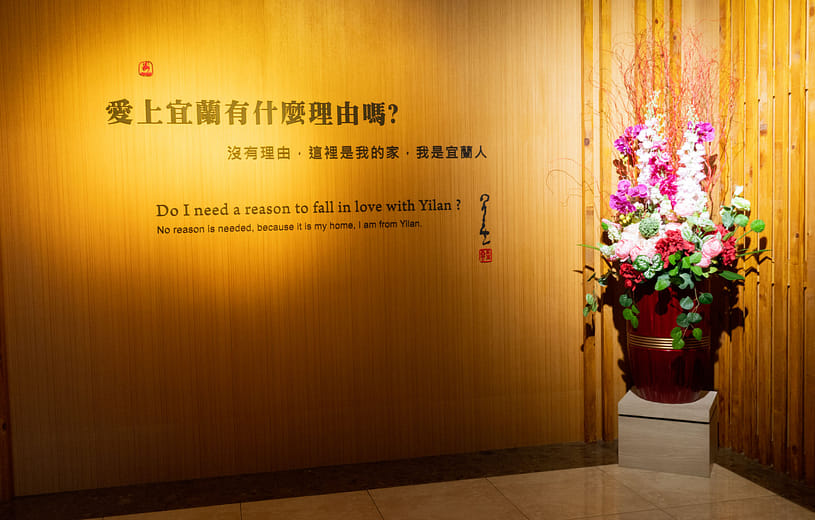
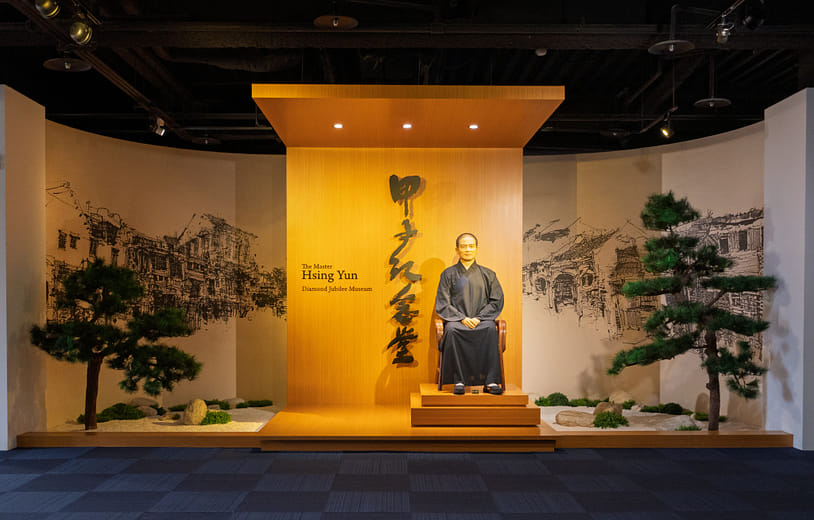
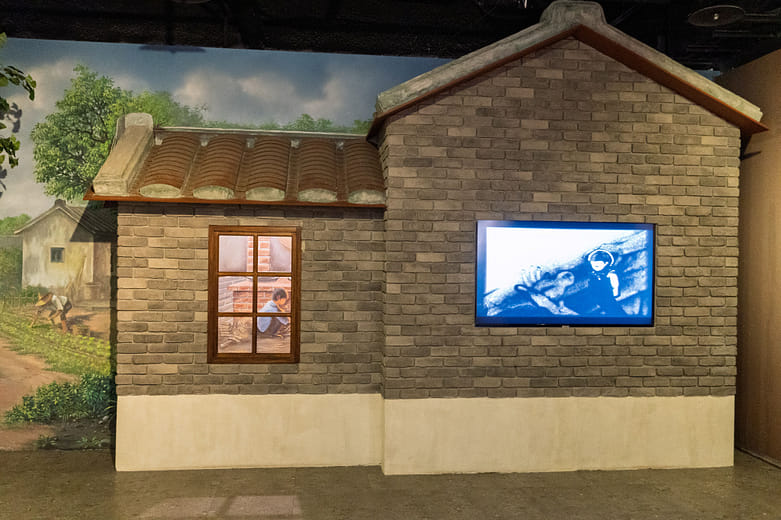
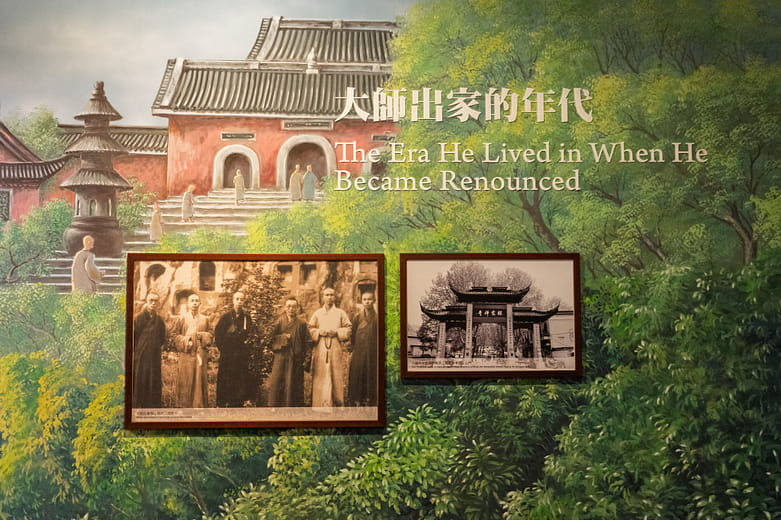
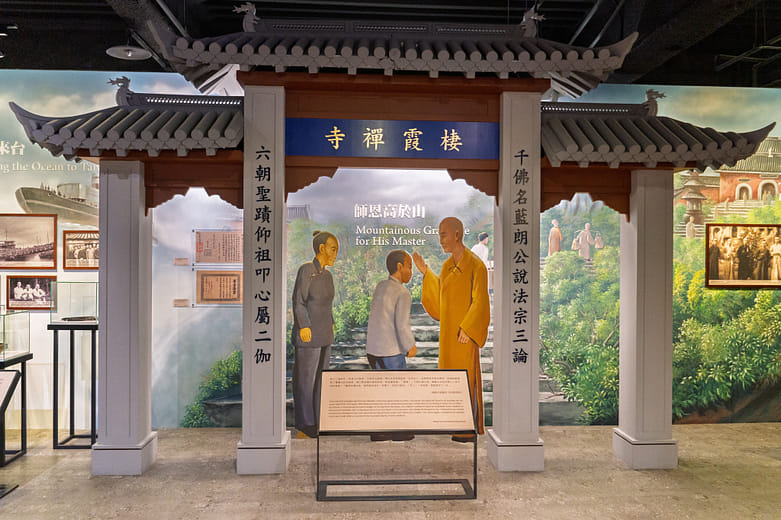
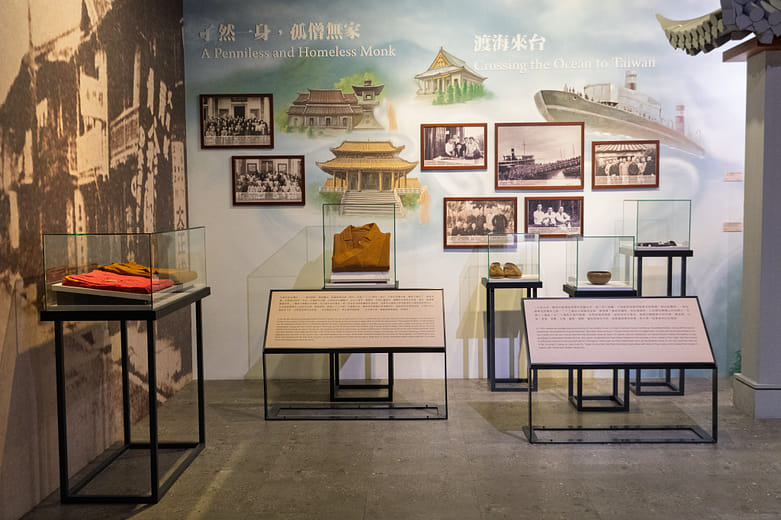
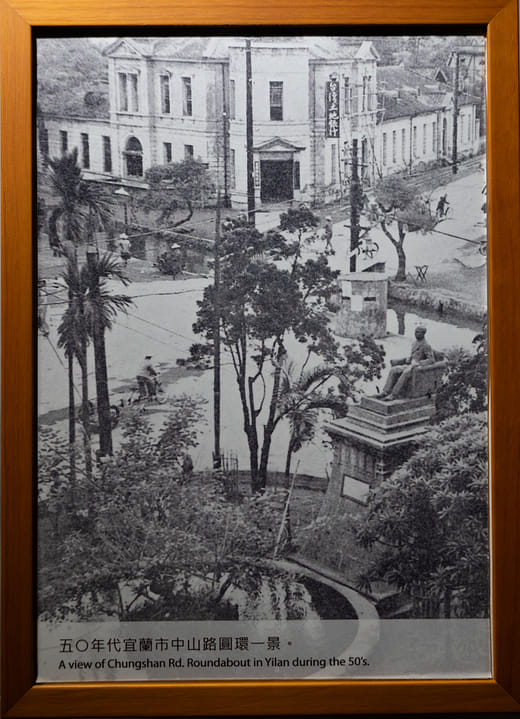
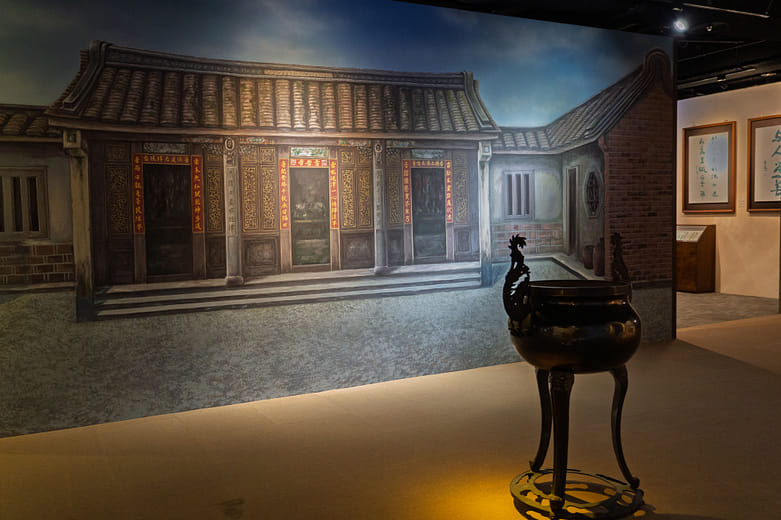
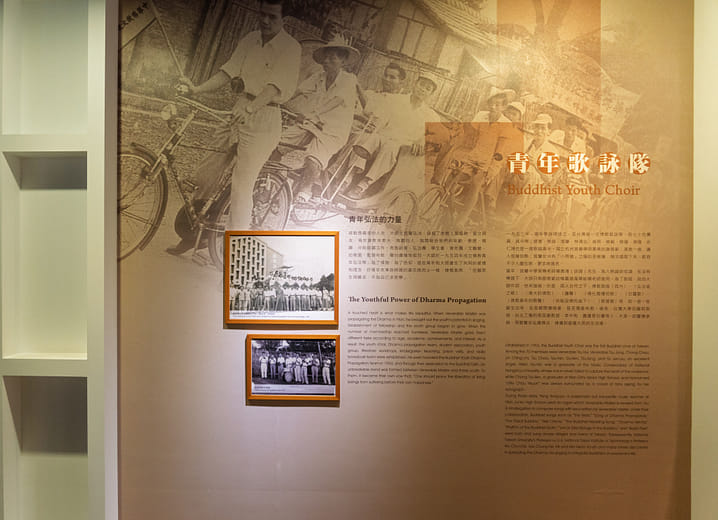
Master Hsing Yun, the founding abbot of Fo Guang Shan, has been spreading the Dharma in Taiwan for over sixty years. His first place of residence upon arriving in Taiwan was “Leiyin Temple” in Yilan, which has since been renovated into the Fo Guang Shan Lanyang Branch. The Master Hsing Yun Diamond Jubilee Museum within the branch showcases Master Hsing Yun’s journey—from his ordination to his work in Taiwan spreading the Dharma and guiding sentient beings, as well as his contributions to education—providing a detailed record of his contributions to the development of Buddhism. The Master Hsing Yun Diamond Jubilee Museum is located on the fourth floor of the Fo Guang Shan Lan Yang Branch Temple. At the entrance are two lines of text: “Is there a reason to love Yilan? There is no reason—this is my home, and I am a native of Yilan.” These words were spoken by Master Hsing Yun in 2009 when he was awarded the “Honorary County and City Resident Certificate” by Yilan, expressing his gratitude for the people of Yilan’s recognition of him. Master Hsing Yun, a native of Jiangsu, was born in 1927. Due to his family’s poverty, he dropped out of school in his youth. Later, amid the turmoil of war, he was ordained at the age of 12. He came to Taiwan in 1949 and was invited to settle in Yilan in 1953. To commemorate the 60th anniversary of the Master’s arrival in Yilan to spread the Dharma, the Lanyang Branch Monastery established The Master Hsing Yun Diamond Jubilee Museum in 2014, showcasing the Master’s six-decade journey of Dharma propagation. Sharing the Lamp with the Buddha: Promoting Humanistic Buddhism The second exhibition area features records of the Master’s propagation of the Dharma in Yilan, as well as large-scale painted murals from “Caitang,” the predecessor of “Leiyin Temple.” Built in the 5th year of the Daoguang reign of the Qing Dynasty (1825), “Caitang” was originally a hall of the Longhua School. In the late Japanese colonial period, it was renamed “Leiyin Temple,” though locals continued to refer to it as “Caitang” or “Fozu Hall.” After Master Hsing Yun settled in Yilan in 1953, he established the “Chorus Group” and, the following year, the “Youth Dharma Propagation Team,” thereby embarking on the path of propagating Humanistic Buddhism. He spread the Dharma through song on the radio, in the military, in rural areas, and in prisons, and went on to record six Buddhist music “vinyl records”—a truly groundbreaking achievement. In addition to early video records of the Master’s Dharma propagation activities, the exhibition hall also displays the simple “bamboo bed” on which the Master slept back then. The interactive area features an old-fashioned bicycle, allowing visitors to experience the Master’s days of cycling into rural villages to spread the Dharma through slide shows and tape recordings. Notable figures such as New Zealand Police Inspector Rakesh Naidoo and entertainer Peng Chachia have all left their footprints here. The Master placed great emphasis on education. In 1956, he founded “Ci Ai Kindergarten” to nurture the nation’s future generations. The exhibition hall displays the baby carriage once driven by Layman Lü Dafu, as well as the harmonium used by the teachers at Ci Ai Kindergarten. It is worth noting that, under difficult conditions, the Master, in order to conserve electricity, once shared a single 5-watt light bulb with the Buddha while writing at his desk. Using an old sewing machine as a table, he wrote works such as *The Life of Shakyamuni Buddha*, *Master Yulin*, and *Biographies of the Buddha’s Ten Great Disciples*. During his time spreading the Dharma in Yilan, the Master organized an annual Buddha’s Birthday float parade. The lively procession and the sight of streets emptied of people moved many; to this day, it remains a topic of fond reminiscence among the older generation and laid the foundation for the propagation of Humanistic Buddhism. The three-dimensional model of the Buddha’s Birthday float parade in the exhibition hall allows visitors to appreciate the grandeur of those days. Childhood and Hometown: Prayer Beads, Monk’s Robe, and Bowl The first exhibition area of the Memorial Hall features sections such as “The Master and His Mother,” “The Master’s Childhood,” and “Educational Experiences.” These sections document the Master’s birthplace in the small town of Xiannv Temple in Yangzhou, Jiangsu Province. Sand art videos depict the Master’s spirit of diligence, compassion, and resilience in the face of poverty, as well as the story of his mother taking him to Nanjing in his youth to search for his father, who had gone missing during the war. There, they encountered Venerable Zhi Kai, the abbot of Qixia Chan Temple, leading to the Master’s ordination at the age of 12. After Master Hsing Yun took monastic vows, he spent 12 years studying at Qixia Zen Temple in Nanjing and other locations. Consequently, the exhibition hall displays old photographs of the Master with fellow monks who ordained during the same period, as well as his graduation certificate from Jiaoshan Buddhist College in Zhenjiang, which he received in 1946. In 1949, the Master “crossed the strait to Taiwan” with the Nationalist Army’s Monk Medical Corps. At that time, he was “alone and destitute, with no home to return to.” The exhibition hall features a schematic diagram of the fleet that arrived at Keelung Harbor, as well as the monastic shoes, patchwork robe, alms bowl, and prayer beads the Master wore at the time. Pioneering a New Era of Dharma Propagation at Fo Guang Shan The third exhibition area displays the tools Master Hsing Yun used when leading his disciples to establish the monastery in Kaohsiung, including a hoe, a dustpan, a conical hat, and a bamboo basket. At that time, Dashu Township in Kaohsiung County, where Fo Guang Shan was located, was jokingly referred to as “a place even ghosts wouldn’t come to.” However, the Master said, “It doesn’t matter if ghosts don’t come; as long as the Buddha comes, that’s enough!” From then on, he blazed a trail through thickets and thorns, ushering in a new era of spreading the Dharma across the five continents. After founding Fo Guang Shan, the Master advocated the Four Major Undertakings through diverse methods of propagation. He established the Eastern Buddhist College to cultivate monastic talent and founded the International Buddhist Fellowship in 1992. He set forth the guiding principles of “harmonizing tradition with modernity, sharing monastic talent with lay followers, emphasizing both spiritual practice and wisdom, and uniting Buddhism with the arts and culture” as the direction for promoting Humanistic Buddhism, thereby realizing the ideal of “Buddha’s light illuminating the three thousand realms, the waters of the Dharma flowing across the five continents.” The exhibition area features a wide range of displays, including physical artifacts, photographs, models, 3D visual technology, and interactive experience zones. At the entrance of the Memorial Hall, in the Reverence Hall, there is a life-size silicone statue of the Master seated in his younger years. Crafted at a 1:1 scale, the statue radiates compassion and dignity, and has become a popular photo spot for visitors.