統計科學研究所大樓Institute of Statistical Science Building
李祖原Chu-Yuan Lee
李祖原為第十二屆國家文藝獎得主。他認為應該將東方對於生命問題的思考,結合⻄⽅的科學,方能為當代中華文化的哲學思考提出新的詮釋。代表作有台北101大樓及高雄85大樓等。
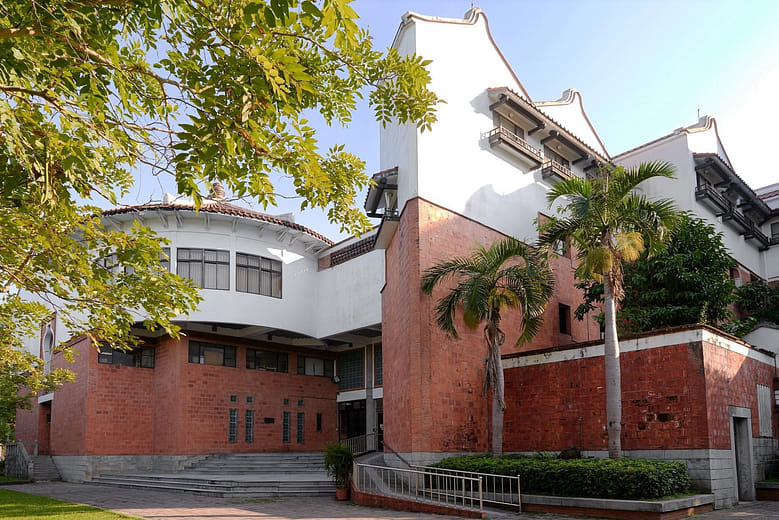
在《雅砌》雜誌1989年12月試刊號,李祖原於訪談中提到:「我認為這個案子是我們很好的作品之一,是不用符號傳達中國意念的方式,而以空間安排的方式,模仿中國庭園的空間感,我稱這種空間為『連環套』,就是『一堵二引三通』的意念,如同迷宮般。是化空間為時間,透過虛實的手法,史空間變成用時間來說明。」
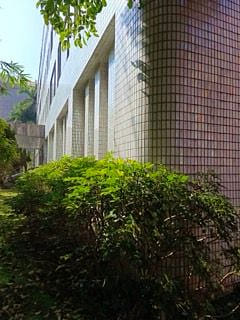
以平面佈局來說,自大廳、庭園、至水池等三個大型空間引導了空間自外而內的秩序,研究室、圖書館等機能多分佈於外側,透過之字形的穿廊環繞中庭挑空,提供研究員工作之餘的喘息空間。而不同區的建築高低錯落,加上開口及框景相互交織,創造層層疊疊、氣運流串的園林「遊」之韻味。
Architect Chu-Yuan Lee is the twelfth recipient of the National Award for Arts. He believes that combining Eastern reflections on life’s questions with Western science can offer new interpretations of contemporary Chinese cultural philosophy. Representative works include Taipei 101 and 85 Sky Tower (Kaohsiung).
In the December 1989 trial issue of the magazine ARCH, architect Chu-Yuan Lee stated in an interview: “I consider this project one of our finest works. It conveys Chinese ideas not through symbols but through spatial arrangement, imitating the spatial sense of Chinese gardens. I call this type of space a chain loop, embodying the concept of ‘one wall, two guides, three connections,’ like a maze. It transforms space into time—using the interplay of solid and void so that space itself unfolds as a temporal experience.” In terms of floor plan layout, three large spaces—the lobby, garden, and pool—guide spatial order from exterior to interior. The library, research rooms, and other functions are placed primarily on the exterior, with zigzag corridors surrounding the central courtyard void, providing researchers with breathing space during work. The varied heights of different building sections, along with openings and framed views, create a layered, flowing aesthetic that evokes the traditional garden ideal of “yóu” (wandering).