分子生物研究所大樓 (前棟) (1985)Institute of Molecular Biology Building (Front Building)
王大閎Da-Hong Wang
本案亦是王大閎的傑作,為中央研究院生科大道以北的研究建築群落揭開嶄新篇章。
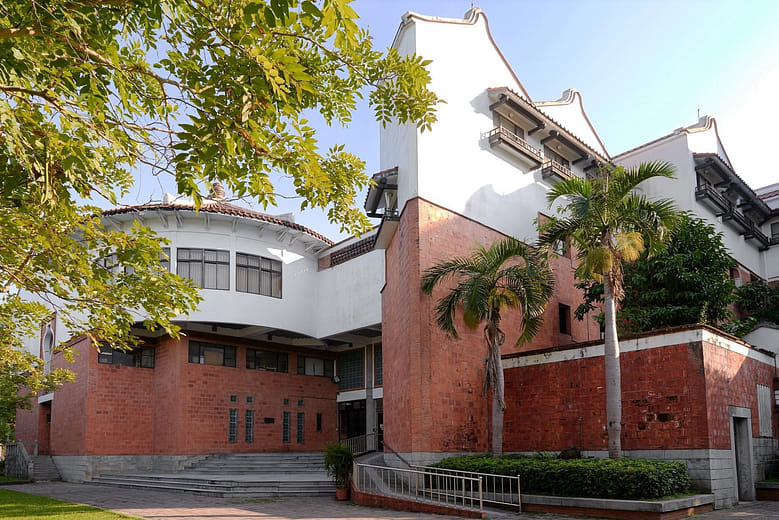
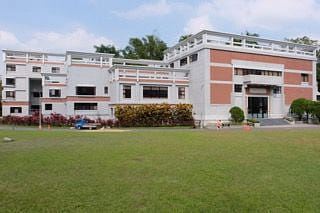
建築在形式、材料與用色上,是相當活潑的一棟建築。立面由十一個柱間距組成,中間三個為軸線入口,窗戶以兩種組合進行變化呈現輕快活潑的表情。入口處有王大閎慣用的大雨庇。整體而言是一個厚實圓潤的量體。圓潤主要表現在量體弧度轉角,以及白色釉面發色的磁磚使用上。此特殊的發色釉面磚面材為王大閎之子王守正所挑選,使用來自日本的白色金屬釉面磚,在光的照射下所泛出如貝殼般七彩的光澤,讓人聯想到生物分子細胞在探求階段所產生的變化,亦減低了方形量的笨重感。
在室內的主樓梯用色輕盈,水平扶手在梯間拉出了線條,用樓梯踏階製造了更多的弧線,也引導自然光線滲入空間,讓整棟建築物更顯躍動活潑。
This inaugural research building along Life Science Boulevard, a masterpiece by Wang Da-Hong, marks the beginning of a new era in campus development.
The building is the last research building designed by Wang within the campus.
In terms of form, materials, and color, the Institute of Molecular Biology is quite a lively building. The facade comprises eleven bay intervals, with the central three serving as the axial entrance and two combinations the windows are arranged as strategies to create a light and lively expression. A large rain canopy is used as well. The entire facade resembles a solid, rounded volume, with roundness primarily expressed through curved corners and the use of white glazed tiles. This special iridescent glazed tile finish was selected by Wang Shou-cheng, the son of Wang Da-hong. Made of white metallic glazed tiles imported from Japan, the surface shimmers with a shell-like rainbow luster under light, evoking the transformative nature of biomolecular processes during the exploratory stage of research. At the same time, it softens the heavy impression of the building’s cubic massing.
The interior main staircase features light colors, with horizontal handrails creating lines through the stairwell, while stair treads generate more curved lines and introduce more light, making the entire building appear dynamic and lively.