2013
600 x 400 x 190 cm
綜合媒材裝置(懸掛鋼結構、壓克力片、LED 燈、繩索及訂製石頭)mixed media installation (suspended steel structure, acrylic sheets, LED lights, rope and customized stone).
作品介紹:
艾比登以其混合媒材的創作而聞名國際,他經常以令人驚異、反映當代社會議題的雕塑和裝置吸引觀眾目光。
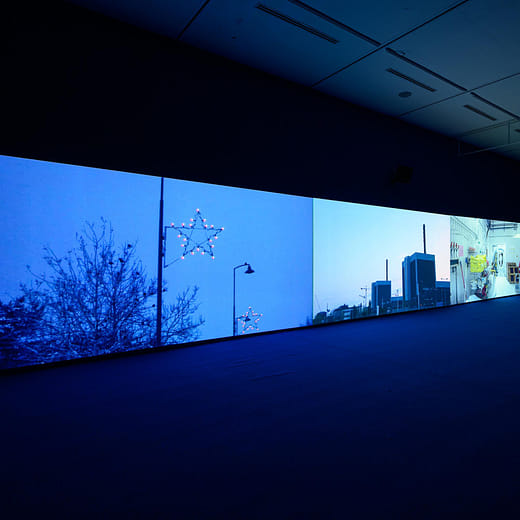
〈Symphony〉是獻給一群有著「情緒搖滾」裝扮的伊拉克青少年們,這種西方潮流風格講求緊身牛仔褲、黑色長髮或尖刺髮型,通常遮住半張臉。2012 年時,這些青少年在巴格達被宗教極端主義者以扔石頭的方式殺害。
這件帶有繪畫感、肖像畫尺幅的錄像裝置描繪的是大屠殺後的場景。被扔石殺害的青年屍體被描繪成雕像、塑像,甚至是小型聖像。每一個雕像的嘴部有一條線連接到鴿子的腳上。這些鴿子(靈魂)無效地拍打著翅膀,企圖逃離卻又被死亡的重量拖住。拍動的羽翅在空中形成整片白雲,形成作品中唯一的動勢。觀眾則目睹死亡的靜止與瘋狂振翅的對比。鳥兒們哨音般的叫聲、拍打翅膀的肅肅聲響,形成某種具有安定效果卻又駭人的白噪音,這即是死亡的交響曲。
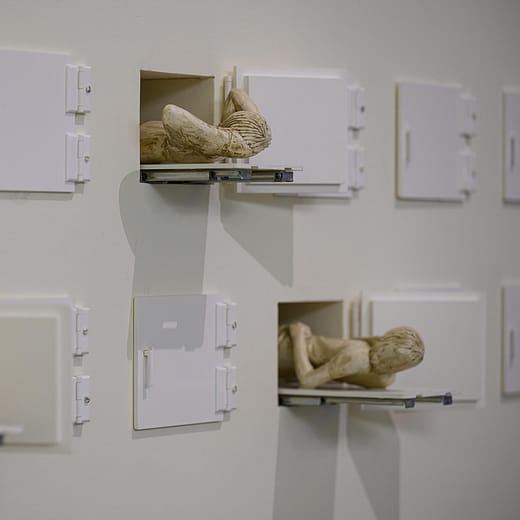
這件作品還延伸為雕塑裝置。展場牆面上裝置著白色小門,一部份關閉著,有些則開著露出內部抽屜,讓觀眾可與之互動,在拉開的抽屜中會看到37 公分長、帶有汙痕的白色雕像,再現著受害青少年的真實面容。這些雕像即是錄像中使用的道具。
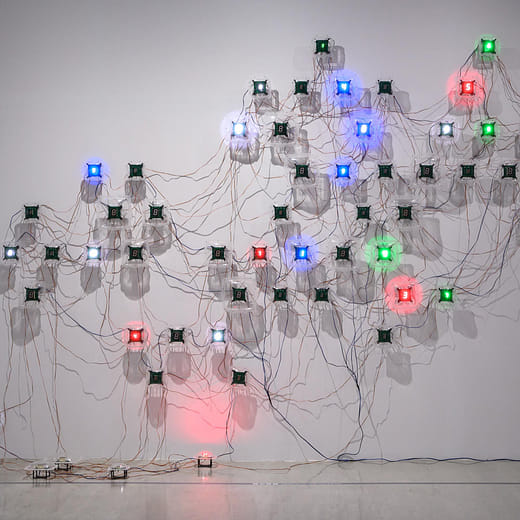
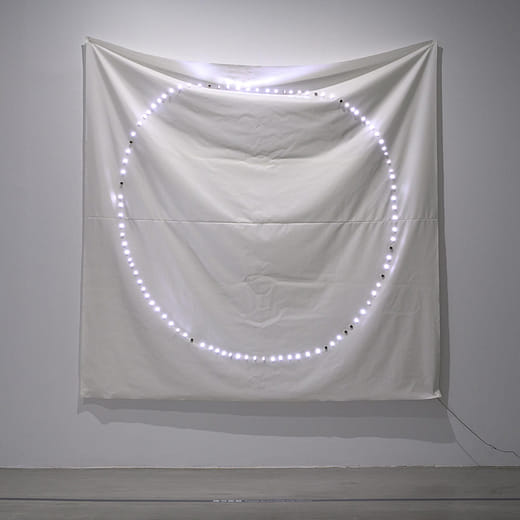
〈Al-Warqaa〉的靈感源自阿維森納的詩作《靈魂頌歌》。在這首詩中,靈魂的旅程被比喻為鴿子的飛翔。在阿維森納的詩文中,靈魂代表一種不朽、空靈的存在,在肉體死亡後會離開身體飛向天際,它象徵永恆,脫離天堂的領域。這件懸掛空中的物件散發著光芒,描繪出一隻鴿子的無形輪廓,運用視覺語言反映這個概念。
「它從天上降至你身,那崇高、不可言喻、光輝的天堂之鴿。那些本質上懂得它的人,曾對它眼見而不識。但它不曾罩上面紗,對人來說,也一直顯而易見。
它過去不願尋你、與你合一;然而,
雖然它悲傷著,它現在卻更不願棄你的身體而離去。
它曾抗拒、掙扎,不願如此之快地被馴服。
但與你合一後,它即慢慢習慣這荒蕪之地;
直到—我如此相信—它以前所追尋及其誓言
終被遺忘在它曾不願離開的天堂花園及林間。」
節錄自伊本.西納(阿維森納)的《靈魂頌歌》
藝術家介紹:
1973 年出生於伊拉克巴格達;現工作生活於芬蘭赫爾辛基。
他的作品運用錄像影像、錄像裝置、多媒體雕塑、聲音裝置、攝影和繪畫等多樣媒材,探索我們所居住之當代世界中的諸多議題。他的主要出發點一直與自身探索視覺藝術、政治和身分認同之間的關係有關。並運用其尖銳的獨特諷刺手法,表現不同社會情境所具有的吸引力,而這些社會情境多在處理難以捉摸之經驗和文化疏離。他運用自身跨文化的背景(以其伊拉克/芬蘭藝術家身分)創作出經常雜揉著嘲諷與矛盾的特殊視覺語言,同時也保留了以人文主義為核心手法。
艾比登具有巴格達美術學院繪畫學士學位(2000)及赫爾辛基藝術大學美術學院時空藝術碩士學位(2005)。自其代表芬蘭參加第52 屆威尼斯雙年展北歐館(2007)的展覽後,他的作品已在世界各地的重要展覽展出。
Work Statement:
Abidin is known internationally for the creation of mixed-media works that engage viewers through often shocking sculptures and installations which aim to reflect issues of contemporary society.
Symphony is a tribute to Iraqi teenagers with “Emo” appearances; a Western trend that consists of tight jeans and long black or spiky haircuts, which covers half of the face. Those teenagers were stoned to death by religious extremists in Baghdad in 2012. The video installation has a painterly portrait-scale scene that depicts the aftermath of an imaginary massacre. The corpses of the stoned youth are depicted as statues, icons, and even
sacred figurines. A thread connects each body by its mouth to the leg of a dove. The doves (souls) flap their wings in vain, attempting to escape yet they are anchored by the weight of death. The fluttering wings form a white cloud in the sky registering the only movement in the work. The viewer is left to watch the stillness of death against the frantically flapping wings. The sound of the birds, their whistling cries and rustling wings, creates a soothing yet terrifying sound track of white noise. It is a symphony of death.The piece continues with the sculpture-based installation; small white doors installed on the wall; some of them are closed, while others are open with sliding drawers that allows the viewer to interact by pulling them out where he/she would see the 37 cm long dirty white statues that represents the looks of the actual teens who were killed. The very same statues were used as props in the video.
Al-Warqaa is inspired by Avicenna’s poem (Ode to a Human Soul), which compares the journey of the soul to the flight of a dove. In his verses the soul represents a timeless, ethereal entity that soars beyond the body after death. It signifies eternity, detached from the heavenly sphere. A suspended object radiates light and depicts an intangible outline of a dove reflecting this concept through a visual language.
“It descended upon thee from out of the regions above, That exalted, ineffable, glorious, heavenly Dove. Twas concealed from the eyes of all those who its nature would ken Yet it wears not a veil, and is ever apparent to men.
Unwilling it sought thee and joined thee, and yet, though it grieve, It is like to be still more unwilling thy body to leave.
It resisted and struggled, and would not be tamed in haste,
Yet it joined thee, and slowly grew used to this desolate waste,
Till, forgotten at length, as I ween, ere hounds and its troth
In the heavenly gardens and groves, which to leave it was loath.”
Extracted from: Ode to a Human Soul by Ibn Sina (Avicenna).
Biography:
Born 1973 in Baghdad, Iraq, and currently lives and works in Helsinki, Finland.
Abidin’s art uses various media such as videos, video installations, multi media sculptures, sound based installations, photography and paintings to explore the issues of the contemporary world that we are living in. His main point of departure is always linked to his intention to explore the complex relationship between visual art and politics & identity. Using a sharp palette of irony to express the gravitation towards different social situations that deal with elusive experiences and cultural alienation. Abidin uses my cross-cultural background (as an Iraqi/ Finnish artist) to create a distinct visual language often laced with sarcasm and paradox, while maintaining an ultimately humanistic approach.
Abidin has received a B.A. in painting from the Academy of Fine Arts in Baghdad (2000) and an M.F.A. from the Academy of Fine Arts in Time and Space Art in Helsinki (2005). Since his representation of Finland at the Nordic Pavilion in the 52nd Venice Biennale (2007), his work has been the subject of major exhibitions worldwide.
攝影:ANPIS FOTO 王世邦。國立臺灣美術館提供。
Photographer: Anpis Wang. Courtesy of National Taiwan Museum of Fine Arts.