In the late 1920s, under the influence of avant-garde movements such as Constructivism and Expressionism, the practice of combining the Shinko Shashin (New Photography) and film with social movements emerged in Japan. The endeavors of the Taiwan Cultural Association in the 1920s coincided with the peak period of image being used as a form of resistance; and until 1931, when social activist groups were banned one after another, image also witnessed the death of social movements before they were reborn through the movement of archived images.
In 1929, after the assassination of Yamamoto Senji, a member of the Japanese House of Representatives, his fellow comrades organized a grand funeral for him as a form of protest. The funeral procession was documented in the form of paintings, photography and documentary films. Also, social movements at this time entered a period characterized by intense protests, and activists were tortured and even killed for these causes, making them the subject of archival images. In 1931, a memorial ceremony and an exhibition were held for Huang Tu-shui, who had passed away at the end of the previous year. In April of the same year, Chen Chih-chi also passed away due to illness when hurrying to submit his work to the Teiten. With sketch drawings, Li Mei-shu documented their memorial services and their looks on their deathbeds respectively. That year, on August 5th, Chiang Wei-shui passed away, casting a final look towards the future with his dying gaze. His comrades made the documentary of The Mass Funeral of Chiang Wei-shui, which included some angles and camera movements that draw on the Shinko Shashin.
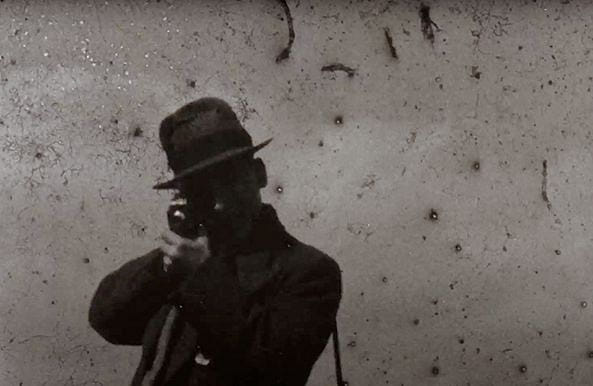
Regarding the Shinko Shashin, Deng Nan-guang had learned related techniques when he was studying in Tokyo from 1929 to 1935, during which he had also taken photos of the Labor Day protest on May 1st, 1931 and newly discovered footages of labor, which extensively corresponded to the Labor Day issue of the New Taiwan People Times published by the New Taiwan Cultural Association in the same year. Chang Tsai, who
had followed his elder brother Chang Wei-hsien’s footsteps to directly participate in the Sin-kik Movement, went to Shanghai after immersing himself in the Shinko Shashin scene in Tokyo and left many works of the New Vision featuring urban flanerie and common people from the lower social stratum.
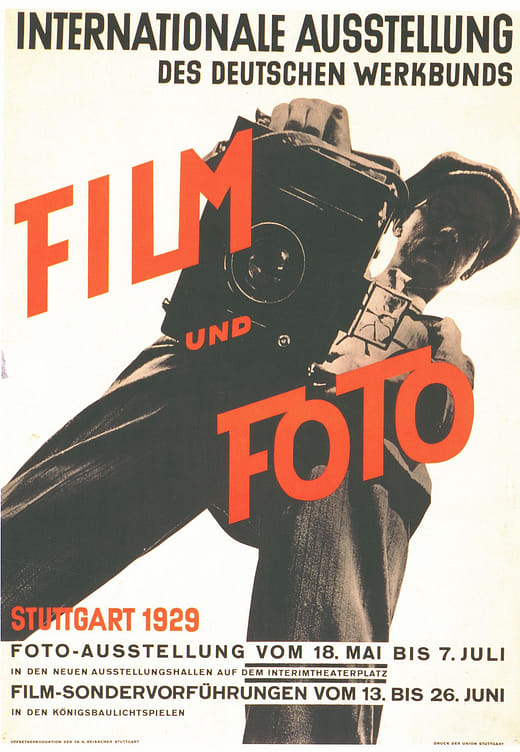
In 1931, news coverage of the German touring exhibition "Film and Foto," which had been respectively presented in Tokyo and Osaka, were published in Taiwan. This section uses this milestone in the history of photography as a reference point, and in a montage-esque attempt, incorporates works of the Shinko Shashin into the exhibition as a way to revisit “the movement of images.” Also, the directorial team led by Huang Pang-chuan and Lin Chunni makes “the images of movement” by utilizing a technological approach to produce images with pioneers of foresights, who had employed distinctive visual forms, and thus initiates a diachronous dialectic and dialogue that project into the contemporary time with “the movement of images.” (Chiang Po-shin)