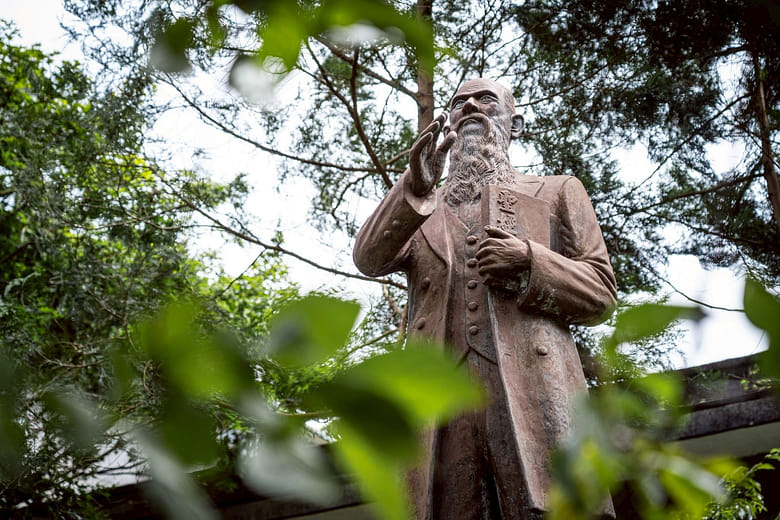
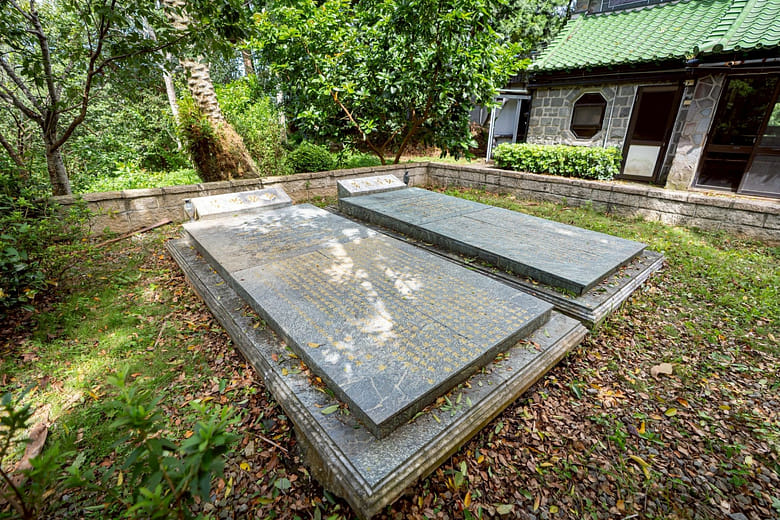
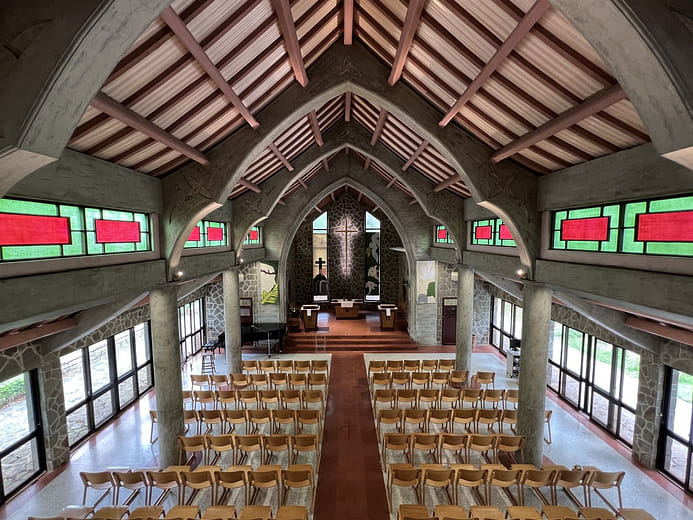
1872年由馬偕博士創辦台灣神學院,1958年建立禮拜堂(由台北名建築師林慶豐及淡水中學美術老師陳敬輝設計,並由建築家胡明德監造完成),是北台灣最早現代化高等學府,設有管風琴學分。
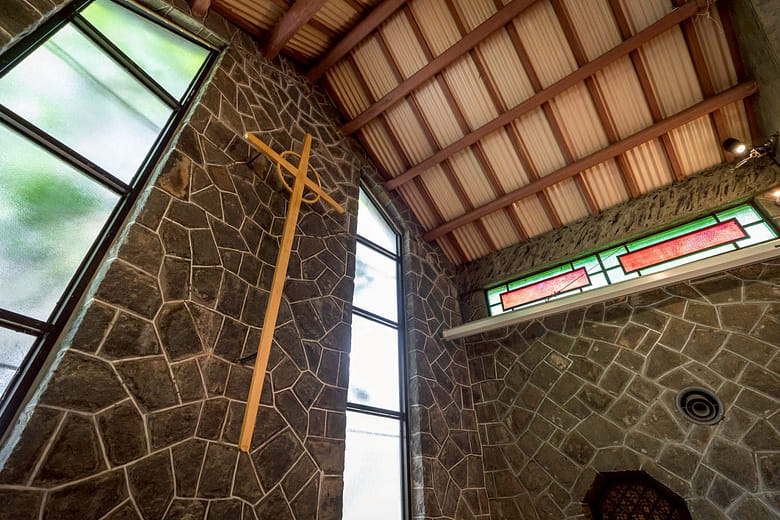
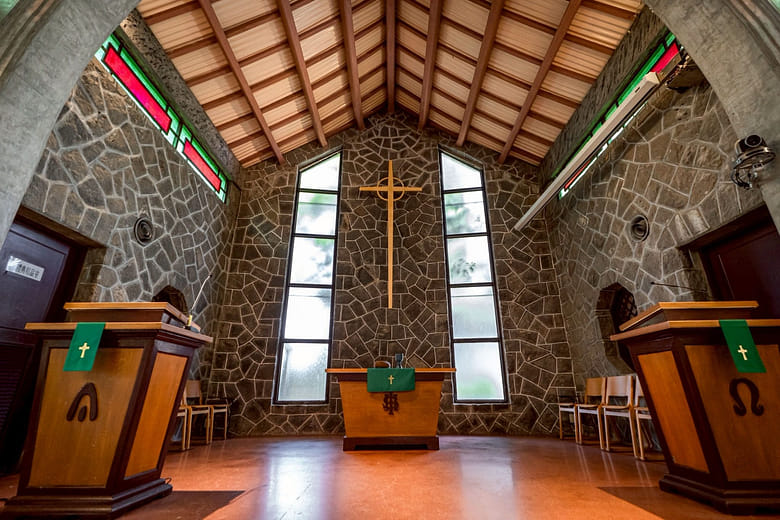
教堂長度約25 公尺、中殿寬度約14 公尺、側廊道約2 公尺寬,總長度加上祭壇約30 公尺,總寬度約18 公尺。特色是採用本地灰色崗石、綠釉琉璃瓦和紅色圓柱,企圖將傳統建築的色彩和材料,運用在教堂神聖空間的塑造上。
教堂外觀融合東方綠瓦屋頂與西式紅磚塔樓設計,巴西利卡長軸空間結構,是神學教學、信仰實踐與禮拜儀式的核心建築場域。簷口瓦當圖騰為流線形水波紋活水意象,充分展現基督乃活水泉源的意涵。主入口融合綠色琉璃瓦與紅磚牆面,結合東方屋脊與西式十字架,象徵福音傳入後與台灣文化的交會,是神學空間的起點與信仰的迎接之門。
Founded in 1872 by Dr. George Leslie Mackay, Taiwan Theological Seminary established its chapel in 1958. The chapel was designed by renowned Taipei architect Lin Ching-feng and Tamsui Middle School art teacher Chen Ching-hui, with architect Hu Ming-te serving as construction supervisor. As the earliest modern higher-education institution in northern Taiwan, the seminary also offers courses in organ studies.
The chapel measures approximately 25 meters in length, with a central nave about 14 meters wide and side aisles 2 meters wide. Including the altar, the total length reaches about 30 meters, while the overall width extends to about 18 meters. Its distinctive character lies in the use of local gray granite, green-glazed tiles, and red columns—materials and colors drawn from traditional Taiwanese architecture—applied in the shaping of a sacred Christian space.
The exterior design blends Eastern-style green-tiled roofs with Western-style red-brick towers, while its basilica-style longitudinal axis structure defines it as the central site for theological education, faith practice, and worship. The eaves feature wave-patterned tiles symbolizing flowing water, expressing the biblical image of Christ as the fountain of living water. At the main entrance, green-glazed tiles and red-brick walls combine with an Eastern ridge and Western cross, signifying the encounter of the Gospel with Taiwanese culture. This threshold thus stands as both the architectural starting point of the seminary’s sacred space and the welcoming gate of faith.