分生所、生醫所委管宿舍Dormitories Managed by the Institute of Molecular Biology and Institute of Biomedical Sciences (1986)
王大閎 Da-Hong Wang
除了研究大樓之外,王大閎在中央研究院也有精彩的宿舍作品。
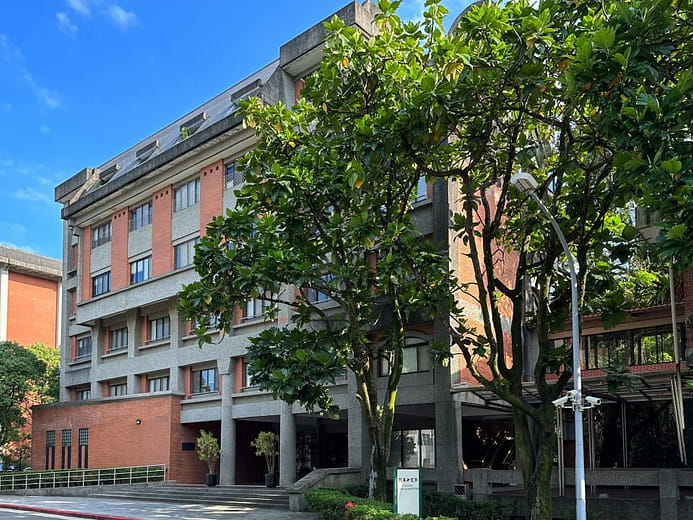
此兩棟宿舍皆為五層建築。垂直動線置於中央,形成雙十字平面。兩側天井使每個空間的通風採光都獲得提升。
空間透過動線的編排,製造出一明一暗的路徑經驗。窗戶(明)、廊道(暗),一進接著一進串接起來,打開家門先是微暗的玄關,經轉折後可見敞亮的客廳與陽台,陽台兩側有瘦長的開口作為景框,前往臥室路上的幽暗在轉進臥室後迎來灑落葉隙的陽光,讓回家的路徑上,仍可以在一明一暗之間,創造空間的精彩。
建築外部則透過雕塑性的轉角處理及女兒牆細部,咖啡色的小口馬賽克磚,造型優雅。周邊滿植樹形優美的樹木增添不少生活品質與情調。
In addition to research buildings, architect Dahong Wang also designed notable residential buildings at Academia Sinica.
Both residences are five stories high, with vertical circulation placed at the center, forming a double-cross floor plan. Courtyards on either side enhance ventilation and natural light for every space.
The layout of circulation creates an interplay of light and shadow along the path. Windows (light) and corridors (dark) are sequentially connected: entering the home, one first encounters a slightly dim entryway, which, after a turn, opens into a bright living room and balcony. Narrow openings on either side of the balcony frame views, while the dim corridor leading to the bedrooms is illuminated by sunlight filtering through foliage, creating a dynamic experience of alternating light and shadow along the journey home.
The exterior is articulated with sculptural corners and detailed parapets, elegantly finished with small brown mosaic tiles. The surroundings are richly planted with graceful trees, enhancing both the quality of life and the overall ambiance.