Due to the discriminatory treatment in the education for the colony, the Taiwan Cultural Association hoped to help people develop the ability to learn new knowledge and therefore advocated the reform of language through using vernaculars, Esperanto and Romanized spelling. Under the circumstance that less than thirty percent of Taiwanese people were educated in schools and facing an extremely low literacy at the time, the Taiwan Cultural Association’s campaign agency, the Taiwan Minpao (Taiwan People's News), also gave up using Japanese and switched to colonial Hanwen while setting up newspaper reading societies and people’s forums throughout the island for enlightening the public. In 1925, the circulation of the Taiwan Minpao exceeded 10,000 copies, making it the third largest newspaper in Taiwan. The newspaper editor Chang Wo-chun and others criticized that the old literature had limited Taiwanese people’s ability of expression and translated new literary works from around the world. Hsieh Chun-mu published the first Taiwanese novel, “Where Is She Going?” while Lai Ho also wrote important works in Taiwanese, calling for the unity of speech and writing that better delineated reality.
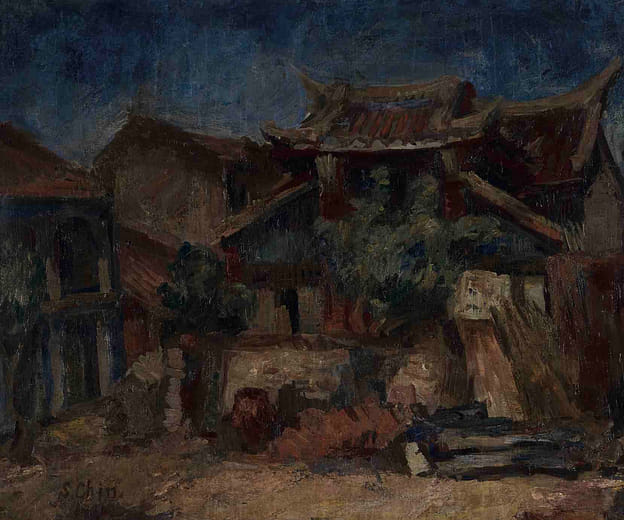
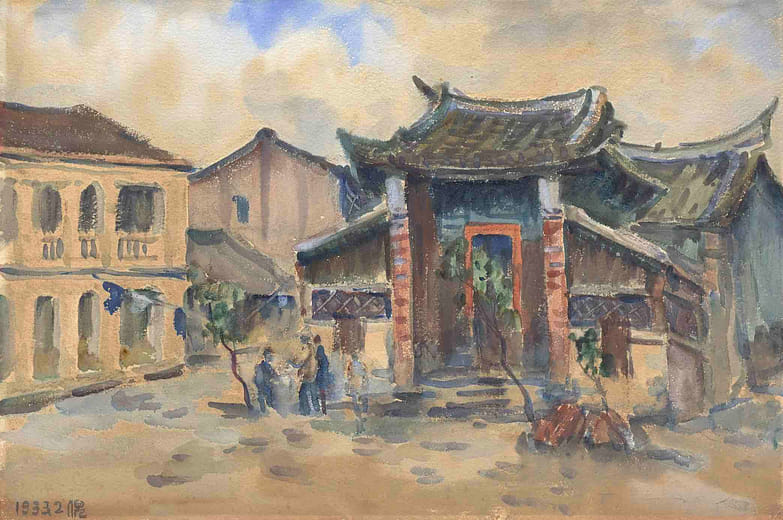
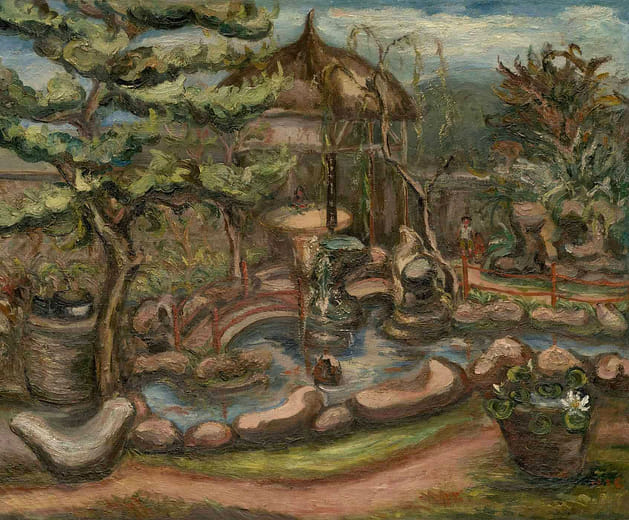
Similar to the idea of the speech-writing unity advocated by the New Literature Movement, the new art movement also replaced the old practice of painting by imitation with the idea of “painting from life,” utilizing new visual forms to create a new epistemology and worldview. Painters gazed into the local colors of their native land and customs through using perspective while selecting specific cultural landscape as their subject matter. Chen Chih-chi and Ni Chiang-huai observed and painted Chen-Jen Temple from the temple courtyard in front of the headquarter of the Taiwanese People’s Party. Kuo Po-chuan’s Tainan Sacrificial Rites Martial Temple portrayed the temple plaza where vernacular seminars took place. Chen Cheng-po’s Linglang Mountain Hall depicts the location where traditional poetry society and the arts and cultural salon organized by the members of the Taiwan Cultural Association gathered. Hung Rui-lin, on the other hand, depicted the living space of the little people at the lower social stratum in Back Street, and the dilapidated-remain-like structure in the Taipei Train Station. These artists constructed visual subjects in the colony through their views of the landscapes of resistance informed by the spirit of the public domain of discourse. Furthermore, artists also conducted material experiments in their landscape paintings. For instance, Kuo Hsueh-hu’s experiment of ink painting in Solitude, Chen Ching-fen’s compositional angle in Rooftops in Paris, and the formal breakthrough constituted of an interplay of light and shadow in Liu Chi-hsiang’s Countryside, all pursued artistic innovation and the avant-garde spirit. Considering these perspectives, landscapes are no longer mere realistic representations but visual expressions that create and revert the understanding of the world. (Chiang Po-shin)