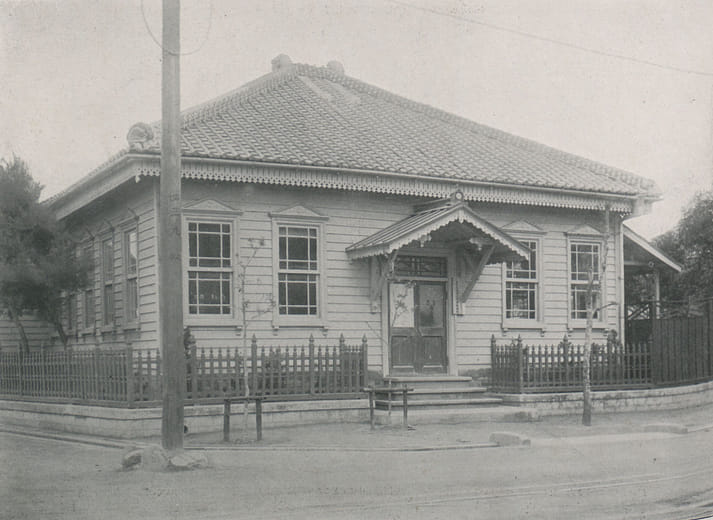
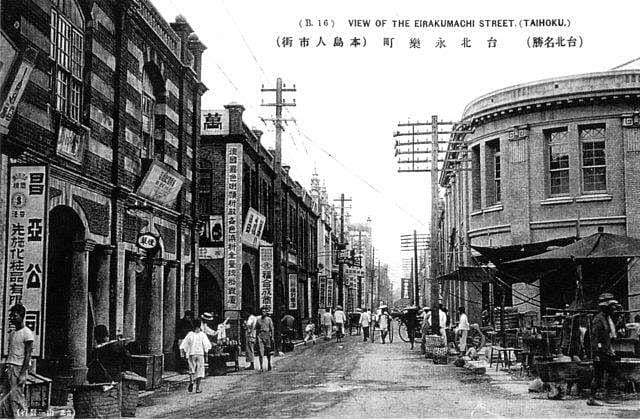
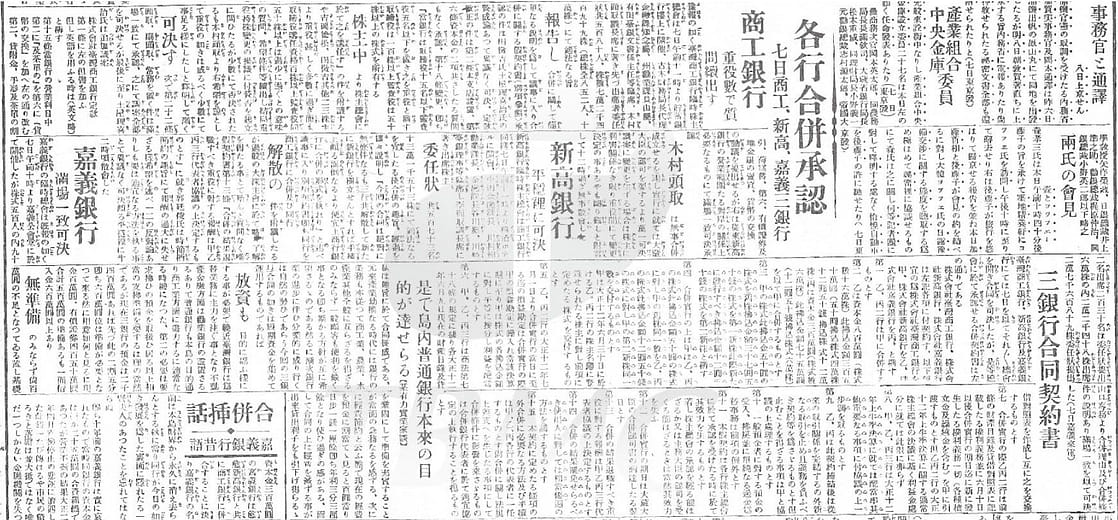
The Hsin-Kao Bank headquarters exemplifies the "modernist" architectural style, which was less common during the Japanese colonial period. Its main features include rounded or softened corners, with a modern, minimalist design characterized by geometric and abstract concepts. The building is adorned with smooth, unembellished surfaces, streamlined horizontal lines, and an elevated gallery that enhances its sequential aesthetic, facilitating smooth passage. Since the opening of Tamsui Port in 1860, Dadaocheng gradually became the commercial and trade center of northern Taiwan. Merchants from England, America, and other countries established foreign firms centered around Dadaocheng, engaging in international trade of tea, sugar, camphor, and other commodities. During the Japanese colonial period, the completion of the North-South Railway in 1908 and the development of Keelung Port positioned Dadaocheng as the hub of three concentric commercial circles with Hong Kong, Shanghai, and Japan. It attracted wealthy merchants and businessmen, leading Taipei towards international prominence. The architectural model of the Hsin-Kao Bank is based on the appearance of the Taipei branch of Commercial and Industrial Bank of Taiwan.