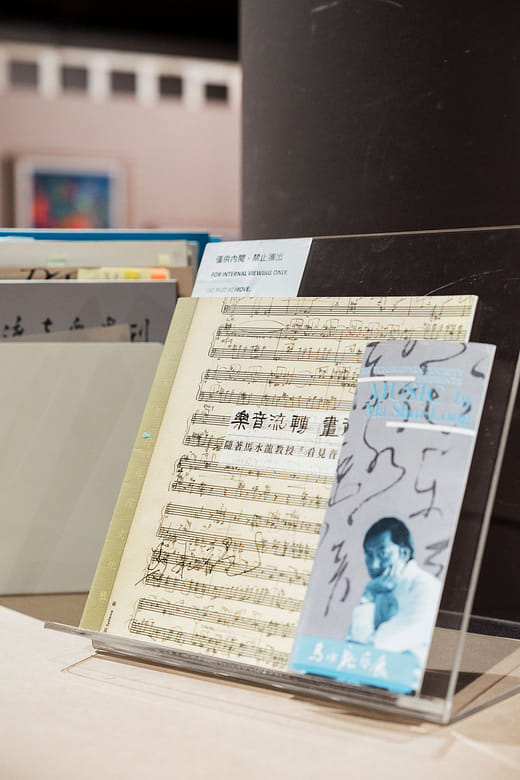
「看見音樂,聽見畫」,馬水龍畫作選Seeing Music, Listening to Painting — Selected Works by Ma Shui-Long
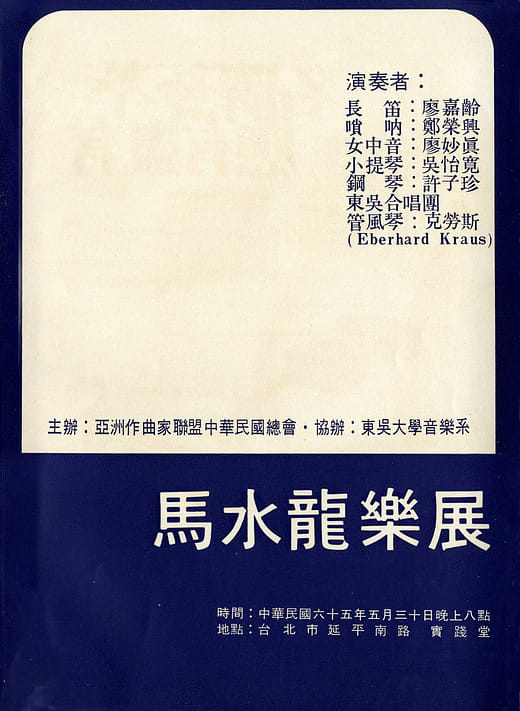
馬水龍雖然以音樂家身分廣為人知,但他從小習畫,繪畫也對他的音樂創作帶來許多影響,在 2007 年《馬水龍室內樂展及賞析》節目表中,他曾明確表示:「作曲者自幼喜愛繪畫與音樂。爾後,雖然選擇了音樂為終身志業,但對 繪畫的興趣與狂熱,始終有增無減。在已完成的音樂作品中,幾首均與繪畫有密切的關係。作曲者認為,所有的藝術創作,雖然因使用的素材不同或其表現 的技法相異,但最後所要呈現的藝術本質,應該是殊途同歸,音樂與繪畫更是 不例外。」
馬水龍生前曾以「看見音樂,聽見畫」作為他樂展的標題,意思是聽覺與視 覺的感通,「聽音樂時腦海中會有畫面」、「欣賞畫時腦海中會響起音樂」。 馬水龍生前最後的兩三年間,因為體力無法負荷大型音樂作品的創作,就將創作慾望發揮在繪畫上,他表示精神上比較沒有壓力。
Though widely known as a composer, Ma Shui-Long was also trained in visual art from a young age. Painting played a significant and lasting role in shaping his musical imagination. In the program notes for the 2007 concert “Ma Shui-Long’s Chamber Music and Reflections,” he wrote:
“Since childhood, I have loved both painting and music. Although I ultimately chose music as my life’s work, my passion for painting has only grown stronger over the years. Several of my musical compositions are closely connected to painting. I believe that all forms of artistic creation—despite differences in medium or technique—are ultimately united by the same artistic essence. Music and painting are no exception.”
Ma once used the phrase “Seeing Music, Listening to Painting” as the title of one of his concerts, expressing his belief in the synesthetic relationship between sound and image. To him, music could evoke vivid visual scenes in the mind, while the act of viewing a painting could inspire inner music. This fluid connection between the senses lay at the heart of his aesthetic philosophy.
In the final two or three years of his life, when his health no longer permitted him to compose large-scale musical works, Ma turned to painting as his primary form of creative expression. He described the practice as mentally freeing and less burdensome—a quiet, sustaining outlet for his artistic drive.