從外雙溪到關渡—創作理念的形成 From Waishuangxi to Guandu — The Formation of a Compositional Philosophy
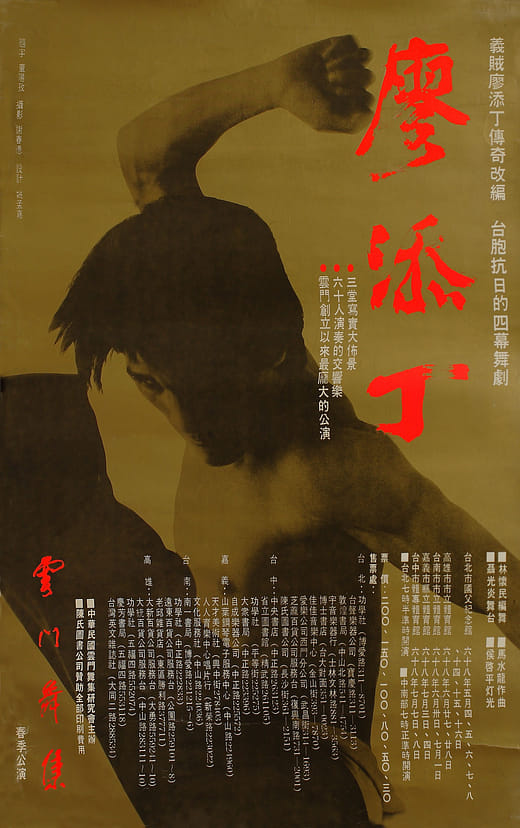
1975 年春馬水龍回台,先去台南家專,然後至東吳大學專任。不久,搬進了外 雙溪校區的宿舍。他曾表示這段時間是他在創作上最得心應手、也是最快樂的 一段時光。1976 年,他在實踐堂舉辦「馬水龍樂展」,發表《小提琴與鋼琴對話》、《展技曲與賦格》、《長笛幻想曲》、《嗩吶與人聲》、以及唐詩等作品。隨著國內舞蹈活動的蓬勃發展,他先後與舞蹈家黃麗薰、林懷民、劉鳳學合作,譜寫了《孔雀東南飛》、《廖添丁》、《竇娥冤》等舞劇音樂。在這些曲子中,馬水龍巧妙地運用了傳統音樂和和戲曲的表達方式,或用唱唸法,或以鑼鼓、梆子等樂器營造氣勢,亦即,用各種方式,將東方音樂語法不著痕跡地融合在西樂技法中,進而轉化成個人獨特的風格。
多年來,他結合傳統音樂文化的民族主義理念並無消退,而實踐手法就在此時期越趨成熟。除上述樂曲外,還有《玩燈》(為管絃樂)、《隨想曲》(為大提琴與鋼琴)、《清明》(為梆笛、風鑼與混聲合唱)、《盼》(為十件傳統樂器的室內樂)、《水龍吟》(琵琶獨奏曲)等,一首首傑作展現了他無比旺盛的創作力。在過去,「國樂」界和「西樂」界總是壁壘分明,馬水龍卻能創作出一系列兼具雙方特色、又能彼此融合無間的樂曲,並同時得到雙方的認同與稱許,可說打破了彼此間的藩籬。
In the spring of 1975, Ma Shui-Long returned to Taiwan. He first resumed his teaching position at Tainan Junior College of Home Economics, then accepted a full-time appointment at Soochow University. Not long after, he moved into the university housing on its Waishuangxi campus. He later recalled this period as the most creatively fluent and joyful time of his career.
In 1976, Ma held his first large-scale concert, "Composition Concert of Ma Shui-Long," at Shih Chien Hall in Taipei, where he premiered works such as Dialog for Violin and Piano, Toccata and Fugue for Organ, Fantasy for Flute, Suona and Voice, as well as song settings of classical Chinese poetry. With the rapid rise of the local dance scene, Ma began collaborating with leading choreographers including Huang Li-Hsun, Lin Hwai-Min, and Liu Feng-Hsueh. These partnerships gave rise to groundbreaking dance scores such as The Peacock Flies Southeast, Liao Tian-Ding, and The Lament of Tou-Ehr.
In these works, Ma skillfully wove traditional Chinese music idioms and theatrical aesthetics into Western compositional structures. Sometimes employing chant-like vocal techniques, other times drawing on percussion traditions such as luogu (gong and drum ensembles) or bangzi (woodblocks), he developed a musical language where Eastern syntax was subtly embedded into Western forms—transformed into something uniquely his own.
Ma’s artistic nationalism, rooted in traditional music culture, never waned over the years. During this period, his approach matured into a fully integrated practice. In addition to the works mentioned above, he also composed Lantern Festival (for orchestra), Capriccio (for cello and piano), Qingming (for bamboo flute, wind gong, and mixed chorus), Expectation (for ten traditional instruments), and Water Dragon Chant (for solo pipa). Each piece stands as a testament to his prolific creativity and refined craft.
At a time when traditional Chinese music and Western classical music were often treated as separate realms, Ma Shui-Long created a body of work that bridged the two—blending their vocabularies without compromise, and earning respect from both musical communities. In doing so, he helped dismantle long-standing divisions and opened new paths for intercultural expression.