作為新一代的工藝家,我們應該擁有自己的思考模式,既要掌握基本的工藝技術,也要在此基礎上發展出更多創新與個人風格,讓傳統工藝得以在現代背景中持續發展。」
"As the new generation of artisans, we need to think in our own way. It’s important to master the basics, but from there, we should innovate and develop our own style to keep traditional crafts alive and evolving in today’s world."
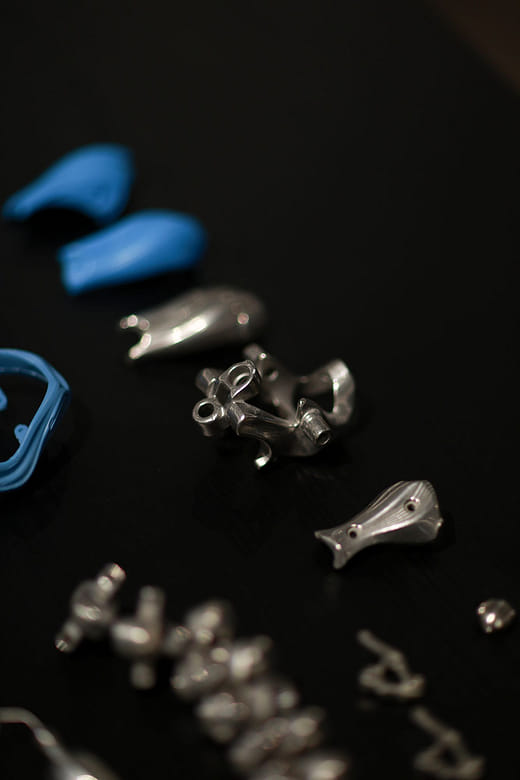
從2013年開始參與臺南市文化資產管理處舉辦的傳統工藝課程以來,剪黏這項技術 便成為林秉賢的創作核心。由最初的興趣出發,他逐漸將剪黏技術提升為藝術創作,並同時涉足文創商品開發以及教授相關課程,致力於傳承與創新剪黏工藝。 林秉賢不僅專注於剪黏本身,還不斷嘗試將其他技術融合其中,例如交趾陶、漆 線、糊紙等,藉此讓剪黏技術更加精進,並延伸至更多樣化的作品之中。其中,縮小版的剪黏作品《孝感動天》便是他結合多元技法的代表作之一。原本專屬於寺廟 屋頂的傳統雕飾,經過他的巧手改良,成為精緻且適合室內收藏的藝術品。透過人 物服飾上的花紋彩繪與金箔裝飾,作品呈現出更為細膩與豐富的視覺層次,展現傳 統工藝結合創新設計的可能性。
Since participating in the traditional craft courses organized by the Tainan City Cultural Heritage Management Office in 2013, the art of fragmented ceramic has become the core of Lin Ping-Hsien's creative work. Initially driven by interest, he gradually transformed this technique into a form of artistic expression. He has also expanded his work into cultural and creative product development and teaching related courses, dedicating himself to preserving and innovating the art of fragmented ceramic.
Lin not only focuses on the technique of fragmented ceramic but also constantly experiments with integrating other techniques such as Koji pottery, lacquer lines, and paper-mâché. Through these efforts, he refines the art of fragmented ceramic, extending it into a more diverse range of works. Among his creations, the miniature piece Filial Piety Moves Heaven stands out as a representative work that combines multiple techniques. Originally a temple rooftop decoration, Lin transformed it into an elegant indoor art piece, enriching its visual depth with intricate patterns and gilded details, exemplifying the fusion of traditional craft and modern design.
林秉賢 Lin Ping-Hsien
1981年生,大學主修工業設計,曾從事嬰幼兒、醫療用品與CNC產品設計工作逾10年,對於傳統廟宇藝術文化之美感到著迷,工作期間斜槓與臺灣國寶級剪黏大師王保原、陳三火等人拜師學藝,承襲大師技法,累積 深厚的傳統剪黏工藝底蘊,更融入個人創新觀點,並跳脫剪黏藝術緊扣廟宇文化的框架,以及擴大除了陶瓷 片以外的材料應用,此種特色顯見於《孝感動天 》這件作品,帶來題材更多元化、當代化的詮釋,使剪黏 工藝有進入日常的潛力。 同時創立「智山傳藝」工作室,培訓與成立個人剪黏工藝團隊,也透過實地導覽與課程設計,輔以廟宇建築 剪黏裝飾專業、剪黏工藝藝術品的創作以及剪黏工藝商品設計,為當代剪黏工藝開創新局,是傳承剪黏工藝 的重要推手。
Born in 1981, Lin Ping-Hsien majored in industrial design at university and accumulated over a decade of experience designing baby products, medical supplies, and CNC components. Drawn to the aesthetics of traditional temple arts and culture, he later apprenticed under renowned Taiwanese master craftsmen such as Wang Baoyuan and Chen Sanhuo. Through this mentorship, Lin inherited their expertise and honed his skills in traditional fragmented ceramic craftsmanship while infusing his work with innovative personal perspectives.
Lin has broadened the traditional boundaries of fragmented ceramic art, which has long been associated with temple culture, by experimenting with materials beyond ceramic tiles. His creations offer a richer, more contemporary interpretation of the craft, envisioning cut-and-paste art as a meaningful part of daily life.
As the founder of the Zhishan Traditional Art Studio, Lin leads a dedicated team and provides training programs, on-site tours, and course designs. Combining expertise in temple architectural decoration, craft innovation, and product design, he has paved the way for a modern renaissance of fragmented ceramic art, becoming a pivotal figure in preserving and advancing this cultural heritage.