















🙀
This content is not yet available in your language (English)

Intro

Name

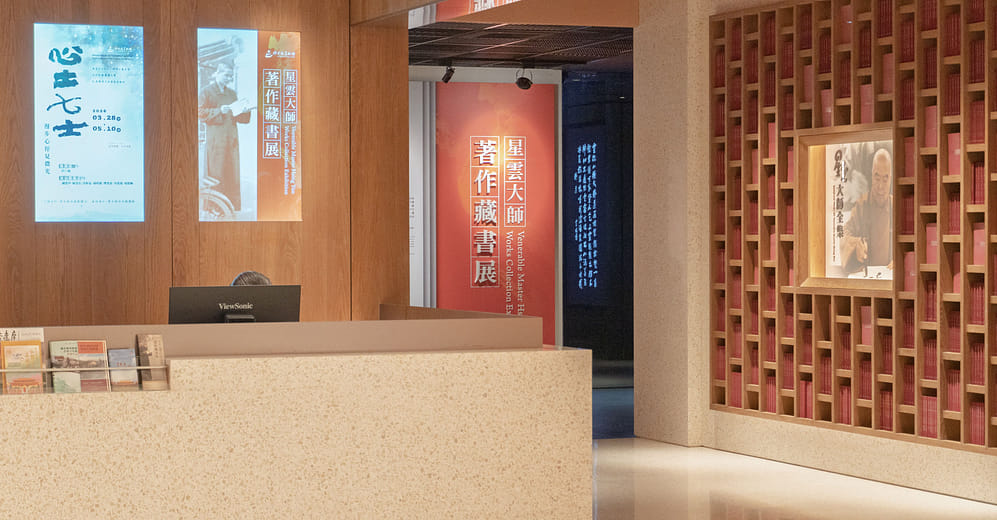
Master Hsing Yin Works Collection Exhibition

Venue

Fo Guang Yuan Art Gallery

Address

No. 153, Xingtian Rd., Dashu Dist., Kaohsiung City
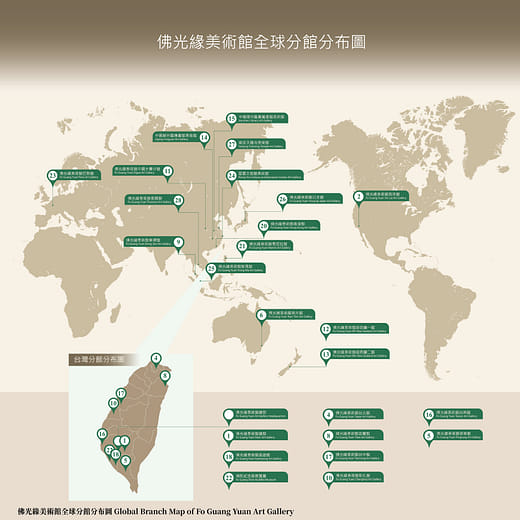
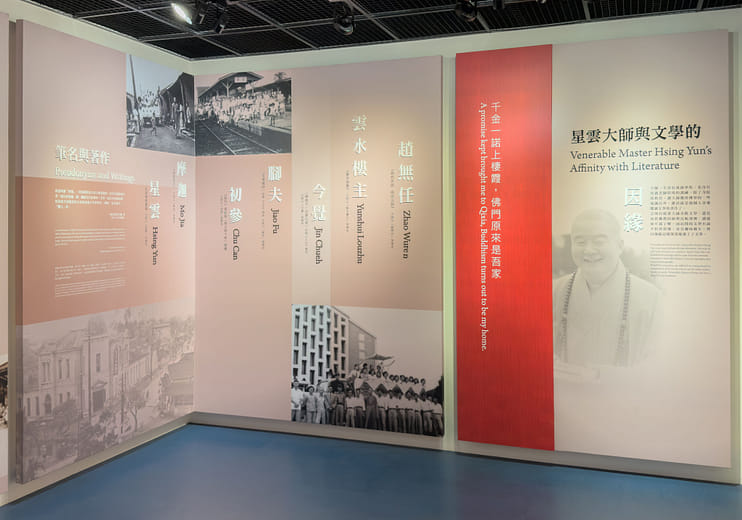
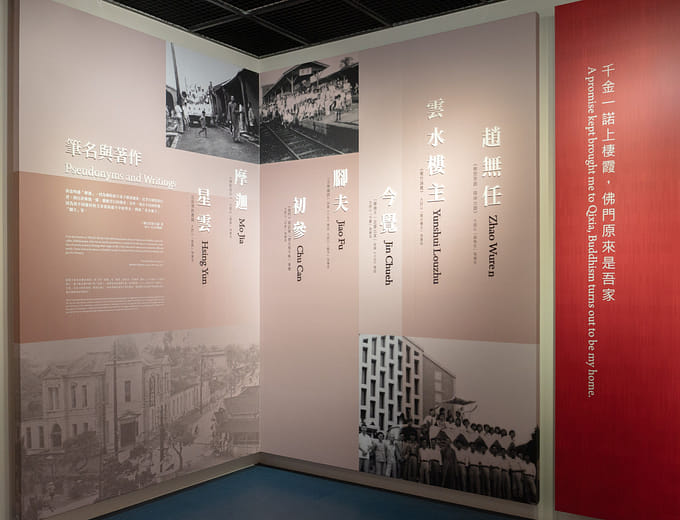
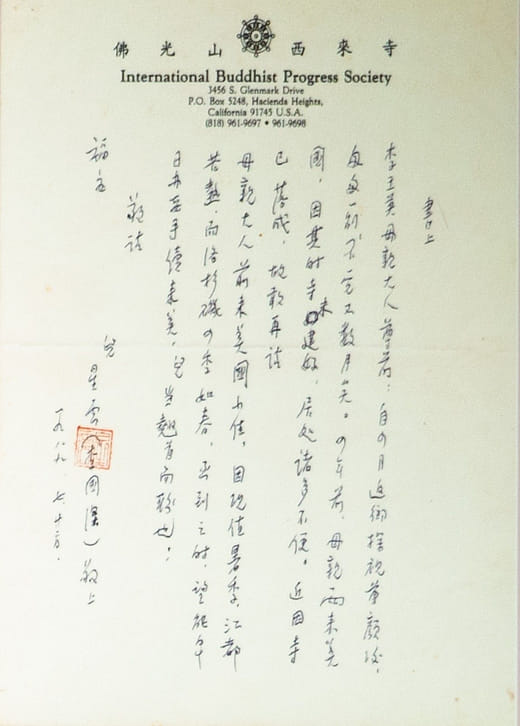
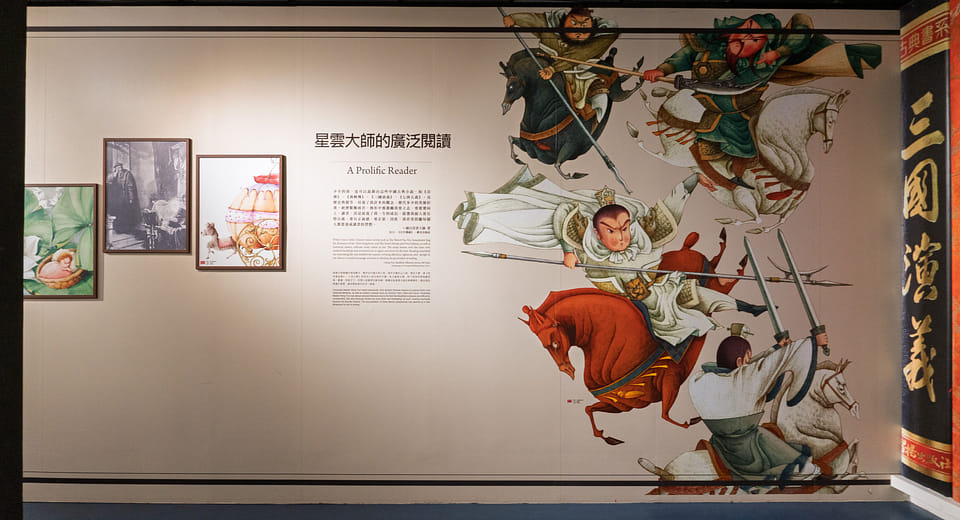
Master Hsing Yun was born in 1927 into a poor farming family in Jiangsu Province. He became a monk at the age of 12 and studied at major Buddhist monasteries in mainland China, including Jinshan Temple, Jiaoshan Temple, Qixia Temple, and Tianning Temple. He came to Taiwan in 1949 and subsequently founded Buddhist chanting societies, choirs, schools, and even built Fo Guang Shan. During this period, he also published the "Awakening World Weekly," "Buddhist Studies Journal," and "Pu Men Magazine," and authored and published books and periodicals such as "National Master Yulin," "Biography of Shakyamuni Buddha," "Buddhist Series," "One Hundred Words on Past Events," and "Between Confusion and Enlightenment." He also translated these works into more than twenty languages, which were distributed worldwide. To this day, he has established more than 300 temples, 27 art galleries, 26 libraries, publishing houses, 12 bookstores, 16 Buddhist colleges, and 5 universities at home and abroad. He has even used the royalties from his books to establish a charitable trust education fund, practicing his belief that "through the medium of words, not only people in this era and not only people in this region can come into contact with the great thoughts of the Buddha, and thousands or tens of thousands of years later, sentient beings on this planet and other planets can also experience the profound meaning of the Prajna of Reality from the Prajna of words." A worn-out pen founded a Buddhist cultural enterprise "I started as a young monk in my late twenties, working to reform Buddhism and making a living with just a worn-out pen. Later, I founded Buddhist cultural and educational undertakings, spreading the Buddha's teachings to every corner of the world through words and publications. I have experienced boundless joy in this," Master Hsing Yun said in his book "A Century of Buddhist Affinity." Throughout his life, the Master dedicated himself to "propagating the Dharma and benefiting all beings." He believed that Buddhism has endured for millennia because of the power of words; words are everlasting, like the resources for propagating the Dharma. Even when the person is gone, the wisdom of words remains. His works, including *National Master Yulin*, *The Biography of Shakyamuni Buddha*, *The Silent Song*, *Buddhist Series*, *One Hundred Words on Past Events*, and *Between Confusion and Enlightenment*, have been translated into more than twenty languages ​​and circulated worldwide. From *Awakening the World* to *Humanistic Buddhism Daily*, from *Pumen Magazine* to *Pumen Journal*, and even the founding of the *Humanistic Buddhism* academic journal and arts section this year; from the compilation of the *Fo Guang Buddhist Dictionary* to the publication of the *Fo Guang Buddhist Canon*, the Fo Guang Shan cultural institutions have been operating at a loss for sixty years, but this has never affected the Master's determination to carry out Buddhist cultural endeavors. The phrase "Where there's a will, there's a way" best describes the master. From translating "The Universal Gate Chapter of the Lotus Sutra" to initiating the construction of the "Hall of Ten Thousand Buddhas' Great Compassion," he said that Guanyin Bodhisattva helped with the construction. His biography of Shakyamuni Buddha has been published more than a hundred times, with global distribution and numerous donations. He said that the Buddha's light illuminated the construction of the Mahavira Hall. In his later years, due to blurred vision, he published "A Century of Buddhist Connections" and "A Humble Monk Has Something to Say" through dictation. In 2015, he published "Compassionate Paths: A Way Out for Both Sides of the Strait" under the name "Zhao Wuren." His works always closely follow social trends and keep pace with the times. Listen to the connection between the masters and literature. The master said, "In the past, I compared Buddhist scriptures to literary works, which many people in the religious community could not agree with. They thought my words were blasphemous to Buddhism, that literature was secular, and that Buddhist scriptures were transcendent, and that Buddhism should not cater to secular interests. I have a different view because those who wrote and translated Buddhist scriptures in ancient times had superb literary skills, which is why Buddhist scriptures have been able to be passed down for so long." The Master never attended school nor received special training from teachers. Aside from the Buddhist education he received at the monastery, which provided him with some knowledge of Buddhism, his primary source of knowledge was his personal love of literature. During his time at Jiaoshan Buddhist Academy, he frequently read the works of contemporary authors such as Hu Shi, Liang Qichao, and Lu Xun, gradually developing a passion for reading that extended to writing and editing. His reading was wide-ranging, starting with classical Chinese novels, then expanding to science fiction, historical literature, and even Western novels like Grimm's Fairy Tales and Faust. Among the works that profoundly influenced him were *Water Margin*, *Romance of the Three Kingdoms*, *The Story of Yue Fei*, and *The Seven Heroes and Five Gallants*. He said, "In Buddhism, 'compassion' has influenced my entire life; in society, 'loyalty and righteousness' have become the foundation of my conduct." The Master's Innovation in Buddhist Literature The cinematic adaptation of Buddhist literature: In 1955, the Master completed "The Life of Shakyamuni Buddha." With the progress of the times, the film adaptation of Buddhism was promoted, and the Buddha's life was made into a movie by a film studio. When the Buddhist temple was completed, it was adapted into a twelve-minute 4D film, "The Life of the Buddha." The Master used technology to spread the Dharma, making the propagation of Buddhism and the Dharma more popular. The modernization of Buddhist literature: Early Buddhist books were often poorly printed and written in difficult classical Chinese, making it hard for Buddhist teachings to resonate with people. The Master attempted to write Buddhist texts in simple and accessible language, and to adapt them into popular, story-driven novels, such as the biographies of eminent monks published by Fo Guang Publishing House, thus changing people's stereotypical impressions of Buddhism. To make classic stories accessible to children, the Master adapted them into picture books or comics, such as the *Hundred Parables Sutra* and the *Biography of Shakyamuni Buddha*, increasing the enjoyment of reading for children. Even the audio-visual DVDs on Humanistic Television adopted cartoon versions. Master Hsing Yun applied the essence of Buddhism to the people and even the world, completing numerous works with his profound literary talent. Today, these works possess the positive significance and influence of passing on the torch and paving the way for the future. Regardless of their social status or whether they transitioned from the underworld to Buddhism, they have all, through various circumstances, reshaped themselves and transformed their lives through the Master's works. As the writer Lin Qingxuan said, "Master Hsing Yun is a cultured person, but a more accurate description is 'a religious figure with a literary heart.' Ancient scholars used their literary hearts to carve dragons; the Master used his literary heart to carve Buddhas, sculpting Buddhas everywhere in the world." Special Exhibition of Master Hsing Yun's Works and Book Collection Hours: 9:00-17:00. Free admission (open all year round). Address: Fo Guang Shan Temple, Dashu District, Kaohsiung City 840 (behind the Mahavira Hall) Telephone: +886-7-656-1921 ext. 1430 Fax: +886-7-656-5196 E-mail: fgs_arts2@ecp.fgs.org.tw English Microsoft Translator Master Xingyun, born in 1927 in a poor farming family in Jiangsu, became a monk at the age of 12, and studied in the large jungles of Jinshan Temple, Jiaoshan Temple, Qixia Temple, Tianning Temple and other large jungles in the mainland. In 1949, he came to Taiwan and successively founded Buddhist chanting associations, singing troupes, schools, and even built "Fo Guang Shan". During this period, he also published "Jue Shi Periodical", "Buddha Optical Newspaper", "Pumen Magazine", and wrote and published "Yulin National Teacher", "Shakyamuni Buddha Biography", "Buddhist Series", "Hundred Words of the Past", "Between Confusion and Enlightenment" and other books and periodicals, and translated into more than 20 languages of various countries and circulated around the world. To this day, he has set up more than 300 ashrams at home and abroad, founded 27 art galleries, 26 libraries, publishing houses, 12 bookstores, 16 Buddhist colleges, and 5 universities, and even used the royalties from writing books to establish a public welfare trust education fund to practice his "Through the medium of writing, not only in this era, but also in this region, people can come into contact with the great thoughts of the Buddha, and thousands or tens of thousands of years later, beings on this planet and other planets can also experience the wonderful meaning of prajna in reality from the prajna of words." A bald pen founded a Buddhist cultural cause "I started as a young monk under the age of 20 for Buddhist reform, relying on a bald pen to survive, and later founded the Buddhist cultural and educational cause, spreading the Buddha's teachings to all corners of the world through writings and publications, which can be described as infinite joy." Master Xingyun said this in the book "A Hundred Years of Buddha Fate". Everything the master did in his life was for the purpose of "spreading the Dharma and benefiting life". He believes that the reason why Buddhism has been passed down through the ages is because of the power of words, which are endless, like food for spreading the Dharma. Sin