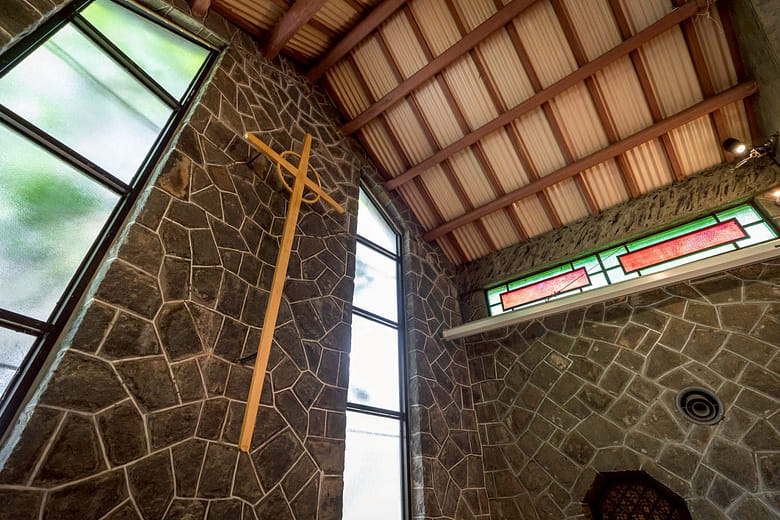
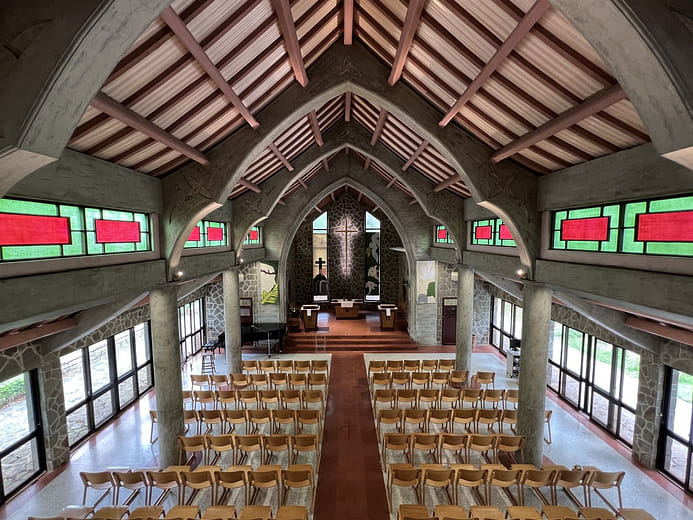
十字架是基督信仰的核心記號,象徵救贖與永生;在自然光的映照下,與前方的聖餐桌、兩側講壇一起,形成禮拜堂的視覺中軸,帶領視線並安定心靈。
祭壇區符號各具意義:左講壇刻 Alpha(Α)代表「起初」,右講壇刻 Omega(Ω)代表「成全」;中央聖餐桌掛十字並擺上餅與杯,三者彼此呼應,清楚道出禮拜核心——道與聖禮,在此合一。
聖餐桌承載「餅與杯」,是聖餐禮的中心;右側講壇主要用於講道與帶領禱告,左側講壇多負責讀經與會眾回應,讓「聖道的宣講」與「聖禮的實踐」在同一處相遇。
桌面覆以綠色禮儀布(常年期,象徵生命與成長)。禮儀布會依教會年曆更換色彩——紫(將臨/四旬期:省察、等候)、白/金(聖誕/復活期:喜樂、榮耀)、紅(五旬節與殉道主日:聖靈、見證)——提醒一年之中不同的信仰主題。
The cross is the central sign of Christian faith, symbolizing redemption and eternal life. Bathed in natural light, it aligns with the communion table and the two lecterns to form the sanctuary’s visual axis—guiding the gaze and steadying the heart.
The chancel symbols carry distinct meanings: the left lectern bears Alpha (Α), “the beginning”; the right lectern bears Omega (Ω), “the fulfillment.” The central communion table displays a cross and is set with bread and cup. Together they express the heart of worship—Word and Sacrament, united here.
In practice, the communion table holds the bread and cup at the center of the Lord’s Supper; the right lectern is used chiefly for preaching and leading prayer, while the left lectern is used for Scripture readings and congregational responses—bringing proclamation and sacrament together in one place.
The tabletops are covered with green paraments (Ordinary Time, symbolizing life and growth). Parament colors change with the liturgical year—purple for Advent and Lent (reflection, waiting), white/gold for Christmas and Easter (joy, glory), and red for Pentecost and martyrs’ days (the Spirit, witness)—reminding us of the season’s spiritual themes.