音樂教育—立足傳統,放眼世界 Music Education — Rooted in Tradition, Open to the World
1981年,馬水龍被禮聘至母校國立藝專音樂科擔任科主任,同時兼國立藝術學院音樂系的課程籌畫。鑑於當時國內音樂教育全盤西化的情況,馬水龍 在參與創系規劃之初,帶領同僚們擬出一套「立足傳統,放眼世界」的課程與目標,將「戲曲唱腔」、「中文唸唱」、「鑼鼓樂」等排入音樂系的課程中, 並規定作曲學生必修古琴。這套課程施行以後,影響頗為深遠。
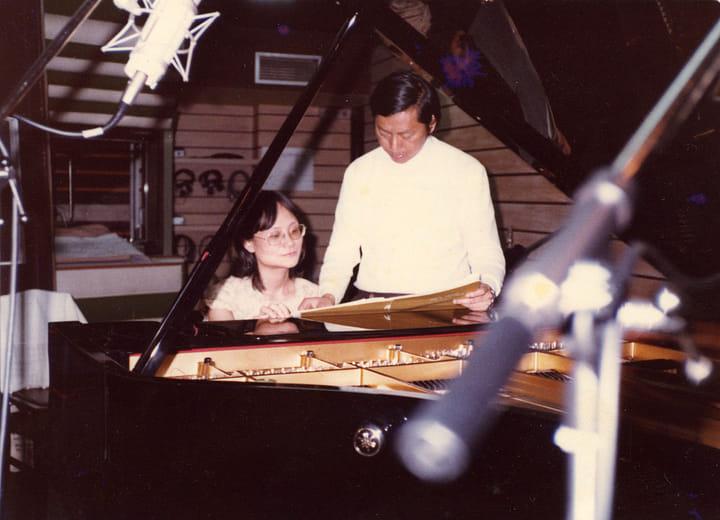
在投入音樂教育行政工作之前,馬水龍早已展現出對教育的關懷和行動。他在 1978-1980 年間,為許多民謠改編了合唱曲,出版《中國民歌合唱曲集》 (1978),其中〈阿拉木汗〉、〈安童哥買菜〉可能是最常被演唱的合唱曲;而《中國民歌鋼琴小品集》(1980),則是在夫人許子珍的協助下,成為非常受歡迎的兒童鋼琴教本。
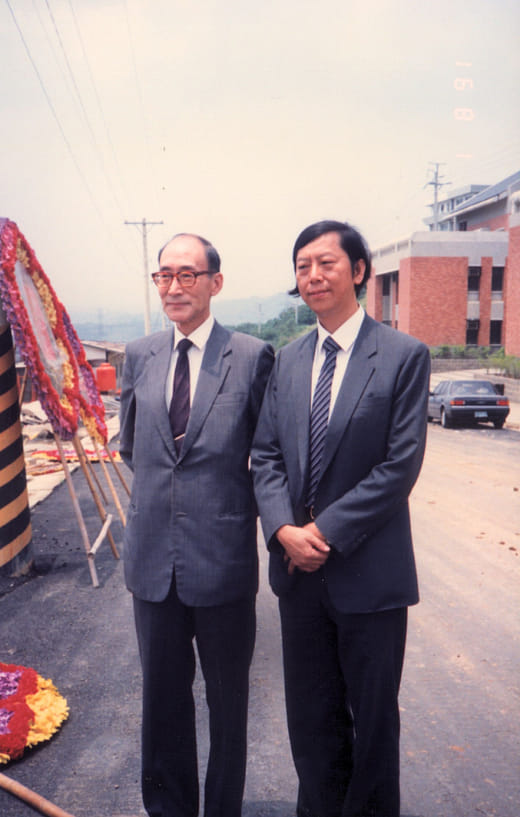
1982 年,藝術學院正式成立,成為國內第一所藝術類科的最高學府。馬水龍則歷任系主任、教務長、院長。回顧這段時間,他曾說:「以前我是一年至 少有三件作品,當系主任時是一年一件作品;當了院長,變成三年才有一件作品。」在他創作力最旺盛的時期,投身於國立藝術學院的籌備、創立,經歷幾次的遷校,最後終能於1991年遷入關渡丘陵上的寬闊校區,整個從無到有的歷程,充滿篳路藍縷的艱辛。馬水龍無法自外於創作的志業,在 1994 年急流勇退,辭掉了許多人艷羨的校長職務。
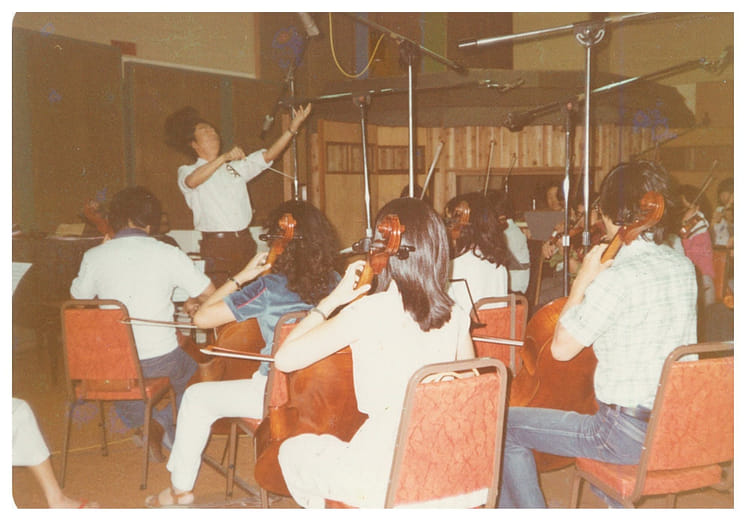
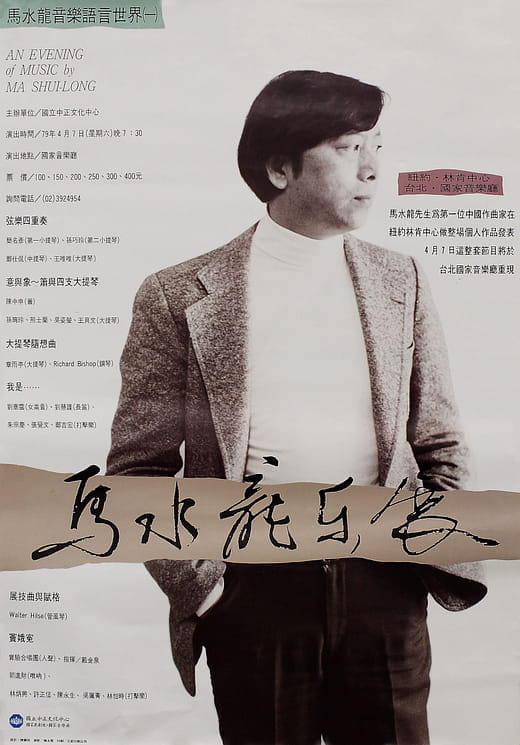
行政再忙、再繁瑣,馬水龍仍完成數首嘔盡心血之作:如《我是...》 (為女高音,長笛與打擊樂器,1985)、《意與象》(為簫與四把大提琴,1989)、《霸王虞姬》(說唱劇初稿,1991)、《水墨畫之冥想》(為九把大提琴,1994)。馬水龍的創作,很少重複之前的類型,尤其是室內樂,除了少數樂曲,大都是都是獨一無二的編制。
“Composition is my destiny; education is what I’ve cared most about in this lifetime.”
— Ma Shui-Long
In 1981, Ma Shui-Long was invited back to his alma mater, the National Taiwan Academy of Arts (NTAA), to serve as Chair of the Department of Music. At the same time, he played a key role in designing the curriculum for the newly forming National Institute of the Arts (NIA). Observing the extent to which music education in Taiwan had become entirely Westernized, Ma led a curricular reform under the motto: “Rooted in tradition, open to the world.” He introduced courses in traditional Chinese opera singing, Chinese lyrical recitation, and gong-and-drum music, and made guqin a required subject for composition majors. These changes would leave a lasting imprint on the future of Taiwan’s music education.
Even before assuming administrative roles, Ma had already demonstrated deep care and initiative in music education. Between 1978 and 1980, he arranged numerous Chinese folk songs into choral works, publishing the Choral Collection of Chinese Folk Songs (1978), with pieces like Alamuhan and Brother Anton Buys Vegetables becoming choir favorites. In 1980, with support from his wife Hsu Tze-Jeng, he published the Piano Pieces on Chinese Folk Tunes, which would become a widely used piano method book for children.
In 1982, the NIA was officially established as Taiwan’s first comprehensive higher institute for the arts. Ma successively served as Department Chair, Dean of Academic Affairs, and finally President. Reflecting on this period, he once remarked:
“Before, I could complete at least three compositions a year. As department chair, it became one. And after I became president, it was once every three years.”
At the height of his creative productivity, he devoted himself to building an institution from the ground up—navigating multiple campus relocations before the NIA finally settled into its permanent home on the hills of Guandu in 1991. The process was marked by vision, labor, and perseverance. In 1994, unwilling to give up his creative life, Ma made the difficult decision to step down from his prestigious role as president.
Despite the heavy burdens of administration, Ma still produced some of his most original and heartfelt works during this time:
– I Am... (for soprano, flute, and percussion, 1985)
– Idea and Image (for xiao and four cellos, 1989)
– Xiang Yu and His Concubine (singspiel, first draft completed in 1991)
– Meditation on Ink Painting (for nine cellos, 1994)
Throughout his career, Ma rarely repeated himself. His chamber works in particular are notable for their singular instrumentation, each piece uniquely conceived and structurally distinct—further evidence of a composer who never ceased to innovate, even in the midst of institutional demands.