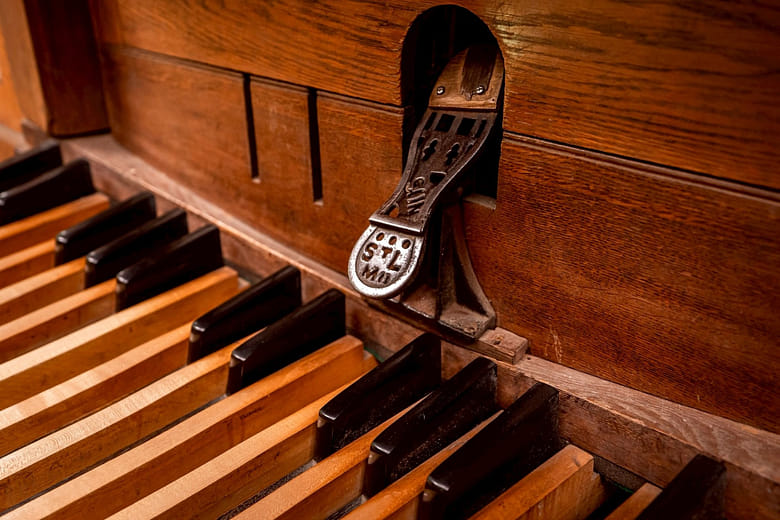
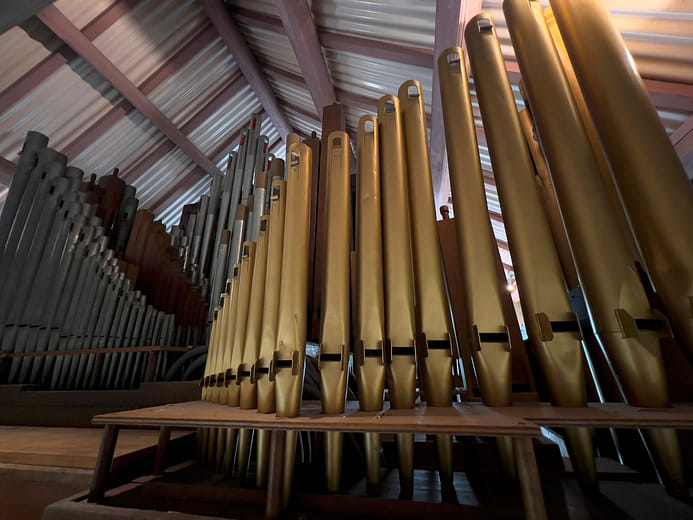
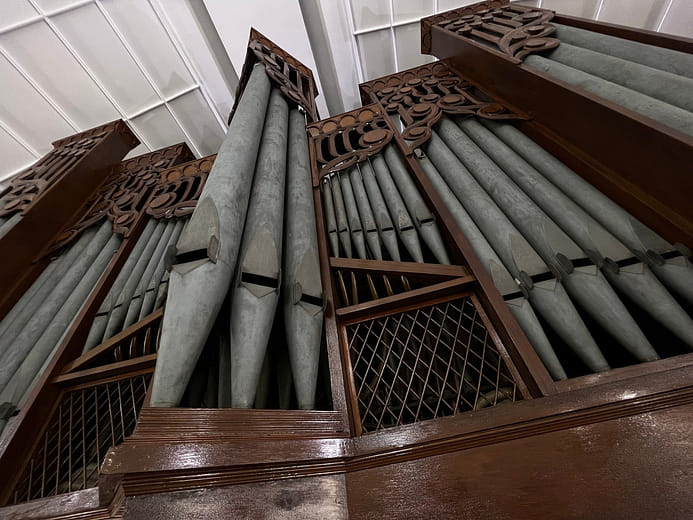
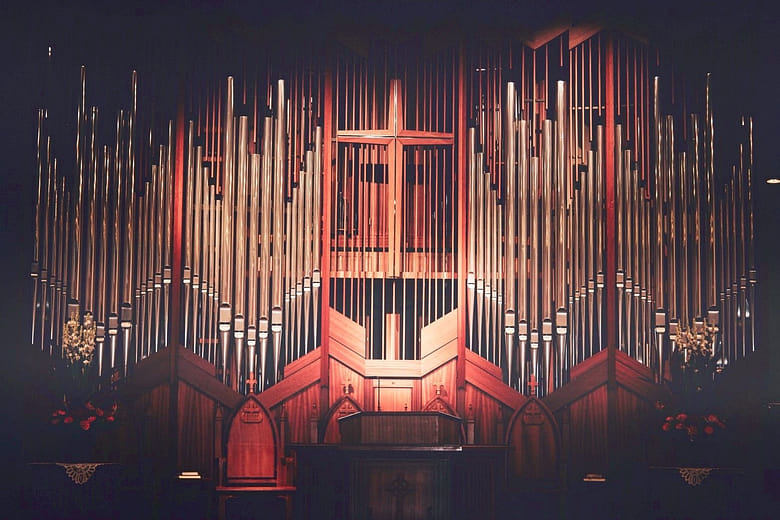
管風琴是屬於鍵盤樂器,結構原理是透過鼓風機(Blower)鼓風製造空氣,利用儲風箱(Wind Bellows)儲存風同時加壓,使空氣經由導風管(Wind-duct)送至風肺(Windchest),配合手腳鍵盤彈奏來運作,當彈奏時,藉由牽引裝置拉開氣閥使空氣進入音管而發出聲音。
圖一機械式管風琴原型說明
1.鼓風機(Blower)
管風琴的遠始想法是,人類有限的呼氣量能用機械技術來取代,達到持續效果。因此鼓風機作為製造風的功能是管風琴的重要概念。從最早的水力風琴,到人力手壓或腳踩來壓動鼓風,19世紀末才改用電力馬達發動製造。
2.儲風箱(Wind Bellows)
從鼓風機製造風後在此儲存和加壓。
3.導風管(Wind-duct)
風經由鼓風機、儲風箱進入風肺的管道。
4.風肺(Windchest)
管子安插的木箱櫃,演奏時能提供足夠的空氣到個別管子內。風肺裏面包含:氣閥,連接鍵盤跟氣閥的零件,拉桿等物件。
The pipe organ belongs to the family of keyboard instruments. Its basic principle of operation relies on a blower, which produces air, and a wind bellows, which stores and pressurizes the air. The air is then directed through wind-ducts into the windchest. When the organist plays the manuals or pedalboard, a mechanical action opens the valves, allowing air to flow into the pipes, thus producing sound.
Photo 1: Prototype of a Mechanical Pipe Organ
1.Blower
The earliest concept behind the pipe organ was to replace the limited breath capacity of humans with mechanical means, achieving a continuous airflow. The blower is therefore fundamental to the instrument. From the earliest hydraulic organs, to hand- or foot-operated bellows, the technology eventually shifted to electric motor-driven blowers in the late 19th century.
2.Wind Bellows
After the blower produces air, it is stored and pressurized in the wind bellows.
3.Wind-duct
Channels that guide the air from the blower and wind bellows into the windchest.
4.Windchest
A wooden chest into which the pipes are inserted. During performance, it supplies sufficient air to each individual pipe. The windchest contains valves, the action mechanism connecting the keys to the valves, as well as trackers and other components.