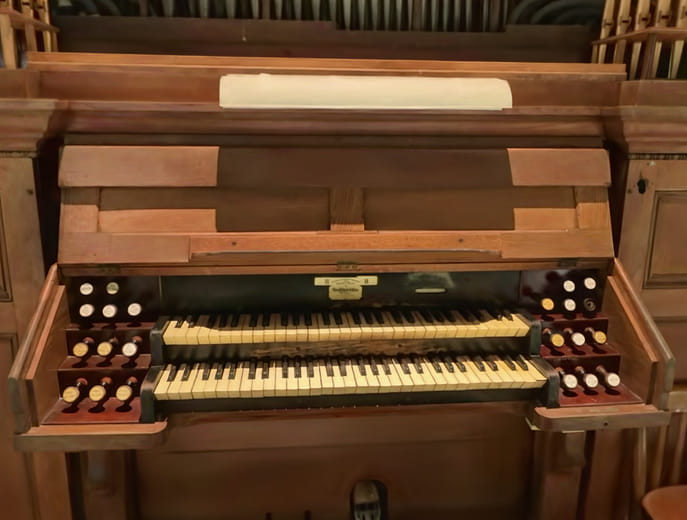
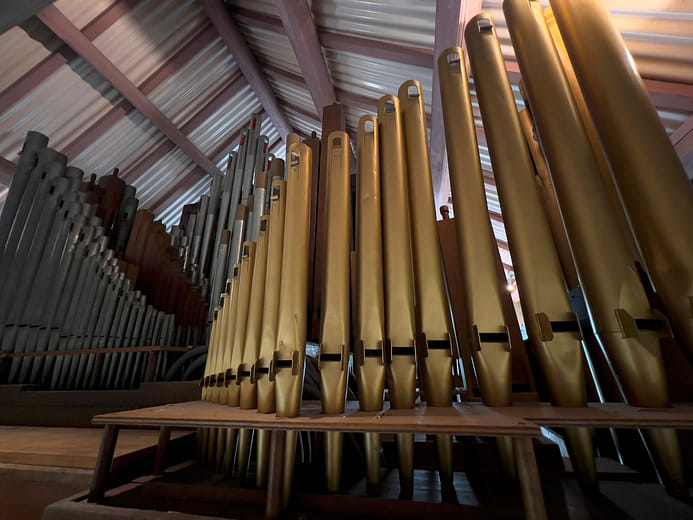
管風琴是所有鍵盤樂器中,唯一擁有最多層鍵盤的樂器,從一層到七層手鍵盤都包含,每一層鍵盤控制不同區域的音管。
在管風琴樂譜上通常會直接用 Manual I.、II.、III.或是Gt., Sw., Ch.來標示,不同國家的管風琴或樂譜,有不同的語言標示,手鍵盤的鍵數通常會有56, 58或61鍵。
第一層手鍵盤,又稱為主要鍵盤(英文:Great organ;德文:Hauptwerk),是管風琴中最主要的鍵盤,整個管風琴中比較獨立的部分,它的音栓數量會比其他層鍵盤還多,且主要音管大都設置在此層。
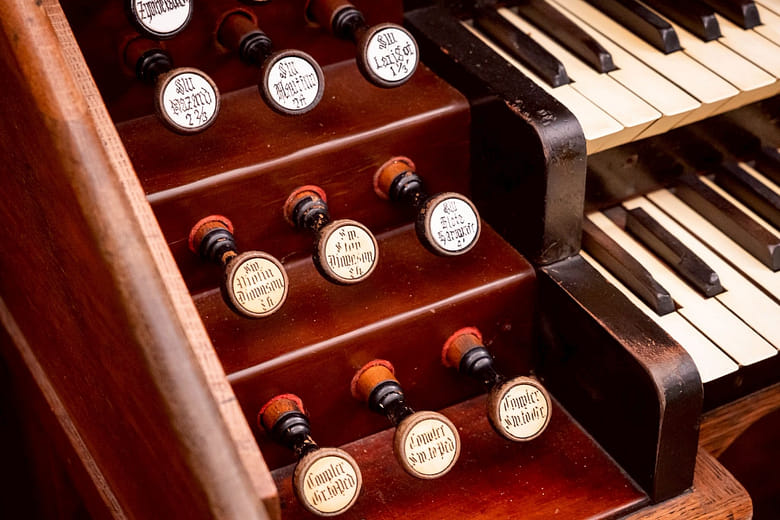
第二層手鍵盤,又稱為增音鍵盤(英文:Swell organ;法文:Récit),「Swell」有擴大、增加之意,除了音色的增加外,也可有音量上的增加或減少的用途。此鍵盤大多採以變化音色音栓較多,有時可以與主要鍵盤做音色層次變換、亦可單獨作為旋律獨奏或伴奏呈現。
The pipe organ is the only keyboard instrument with the largest number of manuals, ranging from one to seven. Each manual controls a different division of pipes.
In organ scores, manuals are typically marked as Manual I, II, III or abbreviated as Gt. (Great), Sw. (Swell), Ch. (Choir), depending on the country and notational tradition. The number of keys on each manual usually ranges from 56, 58, to 61.
The first manual, also known as the Great Organ (German: Hauptwerk), is the principal manual of the organ. It is the most independent division, usually with the largest number of stops, and most of the main pipes are placed here.
The second manual, also known as the Swell Organ (French: Récit), derives its name from the idea of expansion or increase. Beyond the enrichment of tonal color, it also allows for dynamic expression, such as crescendos and diminuendos. This division often contains a greater variety of stops for tonal changes, and it can be used for contrast with the Great Organ, or function independently as a solo or accompaniment division.