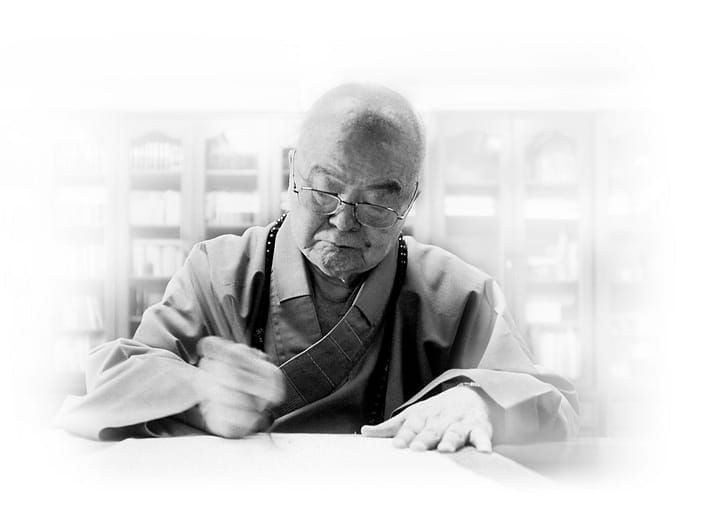
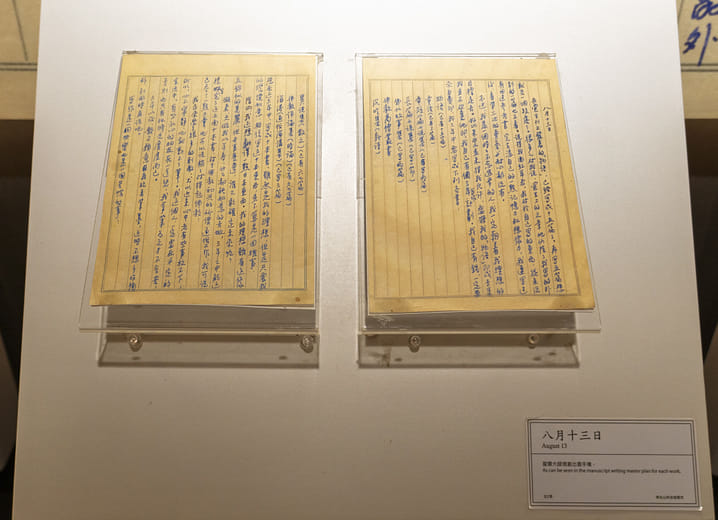
I was most inspired by Mr. Hu Shih's words: "Writing a paper is like expressing emontions and ideas; well-relayed expressions make a good piece. Writing a paper is also like making a speech, the way a paper is written is exactly how one speaks." When I read his words, I was suddenly enlightened. ~ Hsing Yun. Buddhist Affinities Across 100 Years. Kaohsiung: Fo Guang Publishing House, 2013.
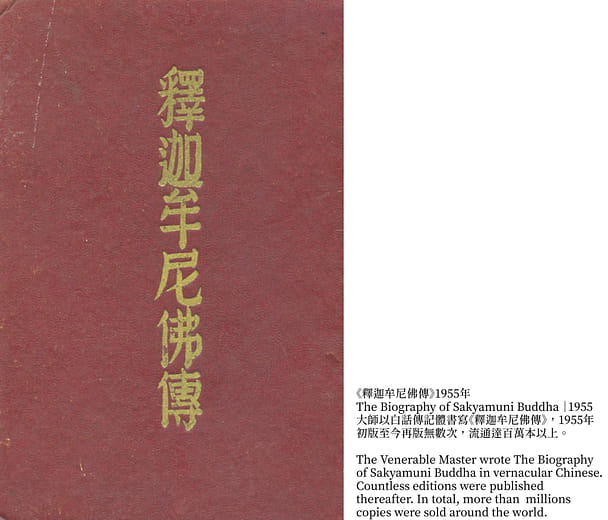
The early books on Buddhism are not well-prinled, nor are they well-writen, and thus devotees often find it difficult to integrate Buddhism into their dally lives. Venerabter Master Hsing Yun has attempted to explain Buddhism in simple words and stories. His publication of the first hardcover book on Buddhism changed people's conservative, inflexible of Buddhism.
EARLY CANONS
The early Buddhist texts have neither paragraphs nor punctuation marks. Thus Venerable Master often thought about how to make the Buddhist teachings more accessible to people. ~ Hsing Yun. “Buddhist Affinities Across 100 Years”. Kaohsiung: Fo Guang Publishing House, 2013.
NOVELS IN MODERN LANGUAGE
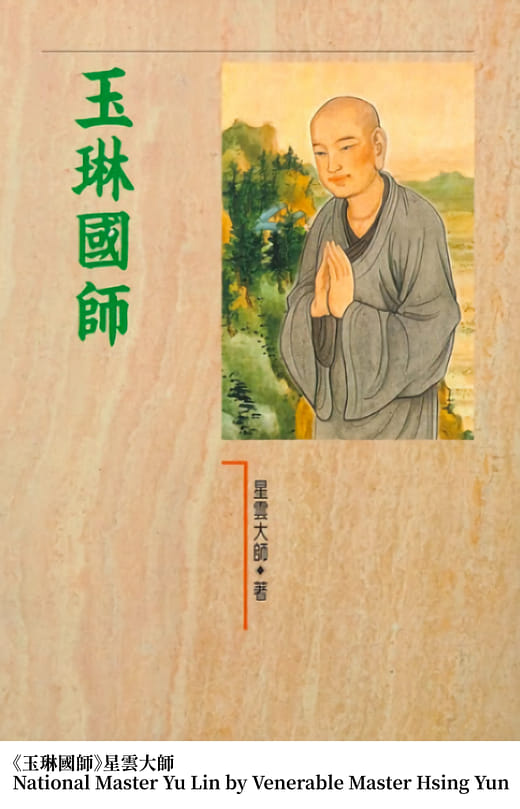
The Buddhist teachings are vast and filled with unfamiliar terminologies, discouraging interested people from seeking deeper meaning, Venerable Master thus looked for texts that are accessible to modem people, and edited the lines by adding paragraphs and punctuation marks, as well as footnotes, to allow easier reading. The project of “a sutra each month" thus began. In order to provide readers with more variety, Venerable Master turned Buddhist texts into novels, which are narrative and interesting to read.
PICTORIAL BOOKS AND COMICS
To make Buddhist stories more accessible to children,Venerable Master turned them into delightful pictorialbooks and comics.
AUDIBLE BOOKS AND VIDEOS
The audible books contain anecdotes of Venerable Master's practices in compassion and wisdom. The soft music that accompanies the narration helps one to relax and appreciate the meaning behind the fables. The animations are designed for young children to learn virtuous ways of living. Venerable Master thinks that Buddhist teachings should be designed to meet the needs of the audience while retaining the core ideas.