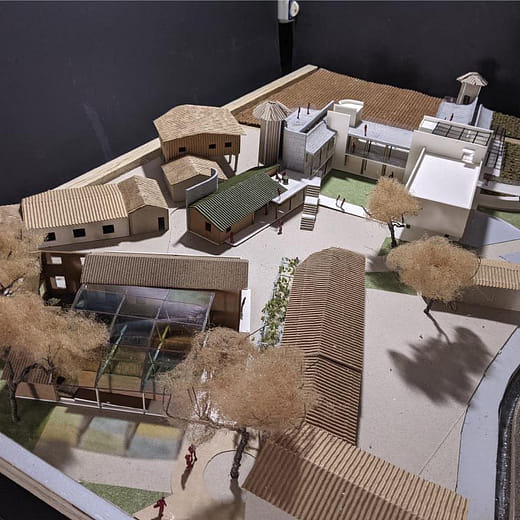
2030年香港步行系统與公共空間重塑 2030 Hong Kong pedestrian system and remodeling public spaces
區榮輝 Wing-Fai Au
指導老師:楊秋煜 Chiu-Yo Yang
基地位置:香港, 中環人行天橋 Central Elevated Walkway, Hong Kong
基地面積:N/A m2
作品說明:
由過去14世紀黑死病的爆發令人逃離骯髒並受污染的街道並躲進「盒子」裏,人們長久以來覺得「盒子」裏就是舒適的安身之所,因此加劇都市的建築密度以及高度,由文藝復興時期的超巨型建築以至20世紀的現代都市塔樓。但現今建築僅僅只是資產,當中呎價並不會帶來生活質素。
經過這次新冠肺炎的持續侵擾,人們漸漸逃離擁擠的「盒子」,更傾於重回室外。
面臨發展飽和的香港,已經無法擠出多出的空間於都市中成為公共空間,因此只通從非正規公共空間着手。
全港有逾八百條公共人行天橋。情形就如港鐵一樣:天橋掌控了城市的動線。政府自八十年代起以行人天橋和隧道規劃行人道路網,將行人分隔,地面則供汽車優先使用。
在設計的重點並不是單把人行天橋變休閒公共空間,而是透過我的設計作為媒介誘發週遭建築擠出公共空間,為香港帶來的新都市功能。
In the past 14th century, the outbreak of the Black Death caused people to escape from dirty and contaminated streets and hide in "boxes." People have long felt that "boxes" are comfortable places to stay, thus increasing the density and height of urban buildings. , From the super giant buildings of the Renaissance to the modern urban towers of the 20th century. But today's buildings are just assets, and the median price per square foot does not bring about the quality of life.
After the continuous harassment of the new crown pneumonia, people gradually escaped from the crowded "box" and tended to return to the outdoors.
Facing the saturation of development, Hong Kong has been unable to squeeze out more space into public space in the city, so it can only start from informal public spaces.
There are more than 800 public footbridges in Hong Kong. The situation is just like the MTR: the flyover controls the flow of the city. Since the 1980s, the government has planned a pedestrian road network with footbridges and tunnels to separate pedestrians and give priority to cars on the ground.
The focus of the design is not to simply transform the pedestrian bridge into a leisure public space, but to induce the surrounding buildings to squeeze out of the public space through my design as a medium, and to bring new urban functions to Hong Kong.