帕海貝爾(1653-1706):C大調觸技曲
此首樂曲為南德學派帕海貝爾的作品,觸技曲(Toccata)。
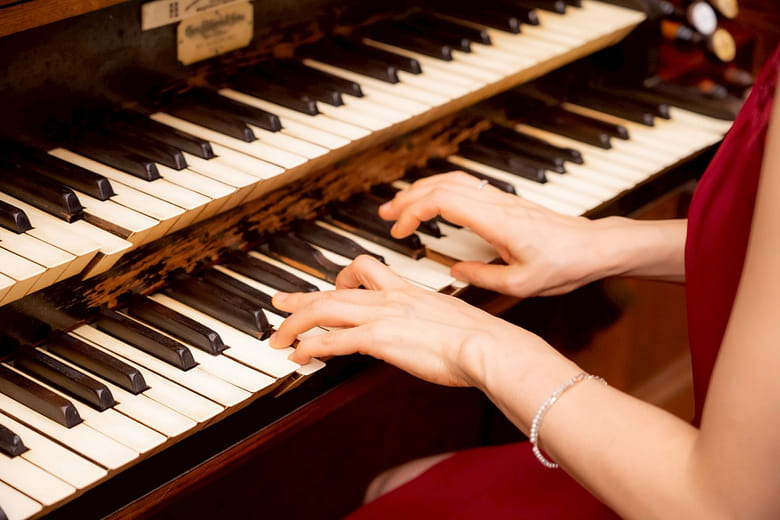
觸技曲源自義大利文""toccare"",意指「觸摸」(to touch)。是一種鍵盤樂的曲式,用來展現演奏家觸鍵時炫技的風格。
在巴洛克時期,觸技曲是前奏曲(Prelude)的同義字,風格上比前奏曲更炫技、更自由,具有強烈的戲劇性,也常有速度的變化。
2.第一層主要鍵盤(手鍵盤)的音栓(色)指示
3.第二層手鍵盤的音栓(色)指示
4.腳鍵盤的音栓(色)指示
5.這些專有名詞稱為『音栓』(stop),能發出音響表達音色,數字則是表達音管長度的概念。樂譜上有建議的音栓搭配,不同的組合會產生出不同的音響與音色,也會決定演奏者的彈奏(觸鍵)方式。
6.樂曲演奏的速度記號-快板
7.雙手都在第一層主要鍵盤演奏
8.左腳的腳尖彈奏此單音,並持續踩著(延長)。
聆賞:馬克斯·雷格(1873-1916) :D小調序奏與帕薩卡亞舞曲
1.雷格的D小調序奏與帕薩卡亞舞曲,創作於1899年,「序奏」莊嚴肅穆,華麗快速的音群展現觸技曲即興般的風格。「帕薩卡亞舞曲」的主題在腳鍵盤聲部不停地重複,樂曲以極弱的音量逐漸開展、漸強、變化,氣勢磅礴地結束全曲。
2.樂曲演奏的速度記號-極緩板
3.雙手於同一層鍵盤上彈奏
4.腳鍵盤功能更加複雜,使用雙腳的腳尖腳跟交替使用。除了雙腳必需張開同時踩八度音外,腳鍵盤的顫音更需要以極快速踩踏彈奏,像踢踏舞。
5&7.音樂術語明顯增加,大量出現強弱力度與樂曲速度的符號。需要依靠音栓的使用與堆疊來製造強烈的健強聲響。
6&8.手鍵盤轉換頻率變高,用交替手鍵盤的方式,呈現戲劇化音色。
Johann Pachelbel (1653–1706): Toccata in C major, P.456
This work by the South German composer Johann Pachelbel is a toccata.
The word toccata comes from the Italian toccare, meaning “to touch.” It is a form for keyboard music designed to showcase the virtuosity of a performer’s touch and technical brilliance.
During the Baroque period, the toccata was considered synonymous with the prelude. Compared with the prelude, however, the toccata is more virtuosic, freer in form, more dramatic, and often marked by striking contrasts of tempo.
Performance notes:
1.Registration indications for the first (main) manual.
2. Registration indications for the second.
3. Registration indications for the pedalboard.
4. These technical terms are called stops, which control timbre and sound color. The numbers refer to pipe length. Scores often provide suggested registrations; different combinations of stops produce distinct timbres and tonal effects, which in turn influence the performer’s touch and articulation.
5.Tempo marking: Allegro.
6.Both hands play on the first (main) manual.
7.The left foot plays a single sustained note on the pedalboard, using the toe.
Listen: Max Reger (1873–1916): Introduction and Passacaglia in D minor
Reger’s Introduction and Passacaglia in D minor was composed in 1899. The “Introduction” is solemn and majestic, filled with brilliant and rapid figurations that evoke the improvisatory style of the toccata. The “Passacaglia” unfolds with its theme repeated continuously in the pedal, gradually expanding from the softest dynamics, intensifying through variations, and culminating in a grand, monumental conclusion.
Performance notes:
1.Tempo marking: Molto adagio.
2.Both hands play on the same manual.
3.The pedal part is considerably more complex, requiring both feet to alternate between toes and heels. Passages demand wide stretches for octaves as well as rapid tremolos on the pedalboard, almost like tap dancing.
4.Musical markings are much more frequent than in earlier works, with numerous dynamic and tempo indications. The registration (use and layering of stops) is essential to producing the massive and powerful sonority required.
5&7.Expressive markings multiply: numerous dynamics and tempo indications. Achieving the required massive sonority relies on layered registrations (stops).
6&8.Manual changes increase in frequency: alternating between manuals is used to create dramatic timbral contrasts.