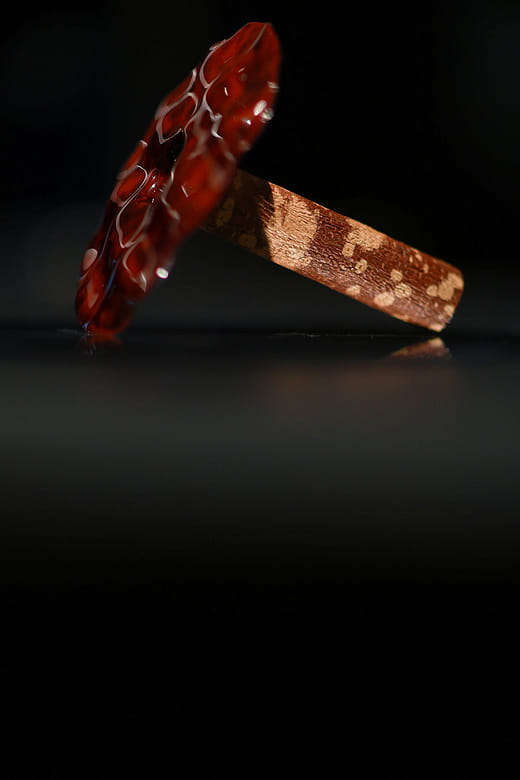
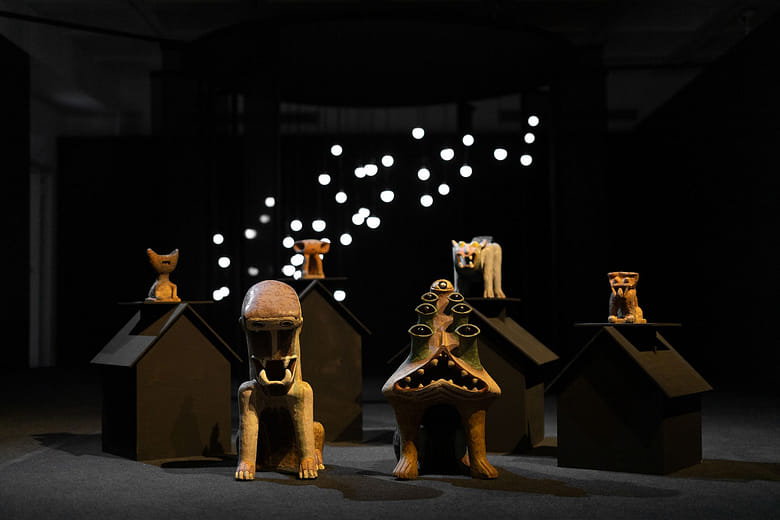
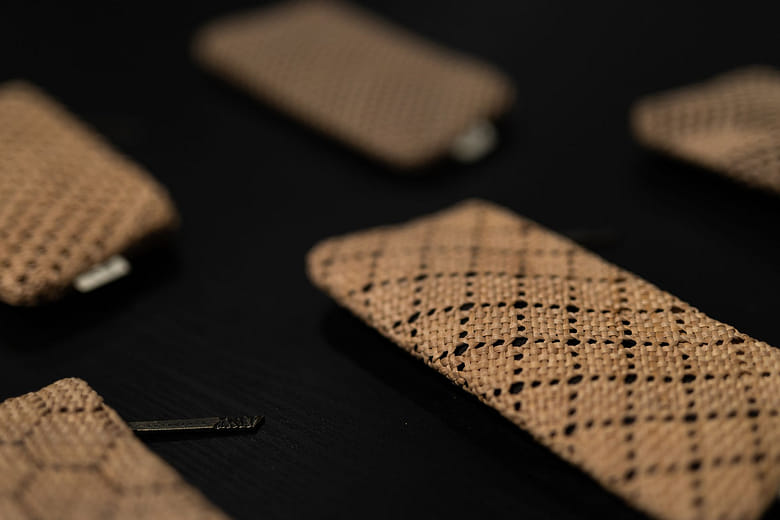
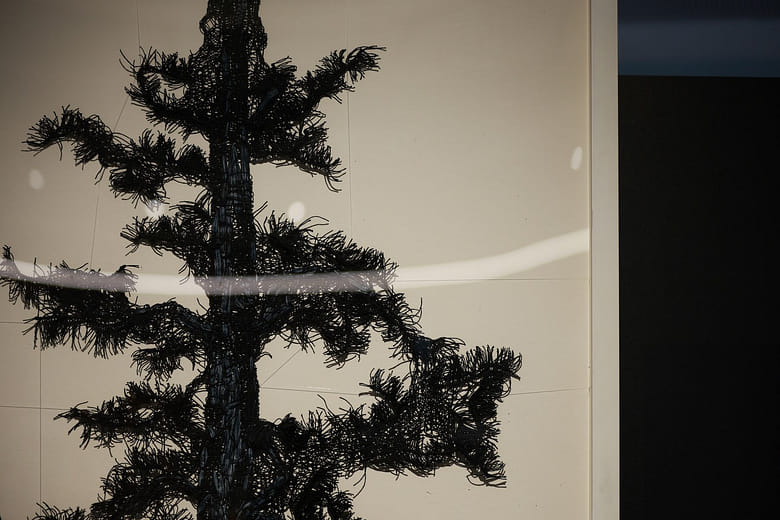
纖維領域廣泛,康雅筑的纖維研究與創作持續不斷地擴大,涵蓋棉花、絲線、麻、 羊毛等,在跨域過程裡不乏大量的閱讀書籍資料,並督促自己使用不熟悉的材料、 工具進行創作與學習。康雅筑認為,透過與各領域纖維專家業者的合作,得以有效 率地促成跨域交流,以一加一大於二的開放性,帶來更寬廣的想像力與做創造力。 康雅筑參與2023浪漫台三線藝術季時,與台灣唯一殖蠶農場泉明生態教育蠶業農場 合作,工藝家首先進行田野調查,了解從種桑、養殖到平面繭製作成蠶絲被的蠶產 業,亦舉辦工作坊邀請民眾以複合媒材製作新型態的「蠶簇」雕塑,並帶回農場讓 蠶寶寶自然而然於其結構上吐絲結繭,最後將有蠶繭的雕塑帶回藝術季展場,展出 三方共創的蠶絲工藝創作,此即為該次展覽所創作的蠶簇 。
Kang Ya Chu’s fiber research encompasses a diverse array of materials, including cotton, silk, hemp, and wool. Her cross-disciplinary explorations are fueled by extensive research and a willingness to experiment with unfamiliar materials and tools, propelling her growth as both an artist and a craftsperson. She firmly believes that collaborating with experts from various fields of fiber craftsmanship promotes dynamic, cross-disciplinary exchanges, unlocking broader horizons for imagination and creativity.
During the 2023 Romantic Route 3 Art Festival, Kang collaborated with Taiwan's only silkworm farm, Chuan Ming Eco-Education Silkworm Farm. She began with field research to understand the silkworm industry—from mulberry cultivation and silkworm rearing to creating silk quilts from flat cocoons. She also hosted workshops, inviting participants to use mixed media to create innovative cocoon sculptures. These sculptures were brought back to the farm, where silkworms naturally spun their cocoons on the structures. Finally, the cocoon-adorned sculptures were exhibited at the festival, presenting a unique collaboration between the artist, participants, and silkworms.
康雅筑 Kang Ya-Chu
1980年生,透過編織及自然素材之運用,以紡織為引,探索當代文化史及社會經濟現象,作品討論主題涵蓋地方文史、國際經濟貿易、社會行為等議題;同時也透過材料本身所代表的歷史及文化意涵,傳遞人類行 為、環境及生命之關聯性。 曾於臺灣、日本、美國、加拿大、立陶宛、奧地利、印度等國家舉辦多次個展、聯展與駐村計畫。著有《織 物地圖1、2、3》,近年活躍於國際各大重要機構展覽與雙年展。作品時常透過對於一地之纖維應用方式的 變化,展現其見微知著的洞察,進而對應出該地區之資源取得、環境意識及經濟運作的鏈結關係。此特色顯 見於作品《北方資源》。
Born in 1980, Kang Ya-Chu is an artist who delves into contemporary cultural history and socio-economics through her innovative use of weaving and natural materials, with textiles serving as the core of her practice. Her work explores themes such as local cultural history, global economic trade, and social behavior. By incorporating the historical and cultural significance embedded in her materials, Kang highlights the interconnectedness of human actions, the environment and life.
Kang has participated in numerous solo and group exhibitions, as well as artist residencies, across diverse locations including Taiwan, Japan, the United States, Canada, Lithuania, Austria, and India. She is the author of Textile Map, Volumes 1, 2 and 3 and has recently been featured in prominent international exhibitions and biennales. Her works often reveal profound insights by examining the evolving application of fibers in specific regions, shedding light on the relationships between resource utilization, environmental consciousness, and economic dynamics. This unique aesthetic is exemplified in the work Northern Resources.