創作核心圍繞布農族文化與現代社會的對話,擅長以版畫技法轉譯土地記憶。透過符號與空間語彙,重構神話與現代生活的對話入口,並持續探索版畫媒材邊界,以及現代處境中的自處與文化傳承。
The practice centers on the dialogue between Bunun culture and contemporary society, translating memories of the land through printmaking. Through symbols and spatial language, the work connects mythology with modern life while exploring the boundaries of printmaking, cultural identity, and inheritance.
您希望觀眾在作品前感受到什麼?或帶著什麼問題離開展場?
What do you hope audiences will feel in front of the work, or what questions do you hope they will leave the exhibition with?
其實沒有預設一定要帶給觀眾什麼固定的啟發,因為對我來說,作品完成後就結束了。我更希望觀者在看完作品後,能連結到屬於他們自己的事物與思考,帶著各自的身體經驗與解讀離開展場。如果幸運的話,這件作品能成為一個剛好的契機,讓他們去展開一段只屬於他們自己與自己的對話。
I do not expect the work to offer viewers any fixed message or inspiration. For me, once the work is completed, my part is finished. I hope viewers can connect it to their own thoughts and experiences, and leave with their own interpretations. If I am fortunate, the work may become an opportunity for them to begin a personal dialogue with themselves.
為什麼選擇透過工藝或手作技法來表現這個議題,而不是使用其他創作形式?
Why did you choose craft and handmaking techniques to address this issue, rather than other forms of artistic expression?
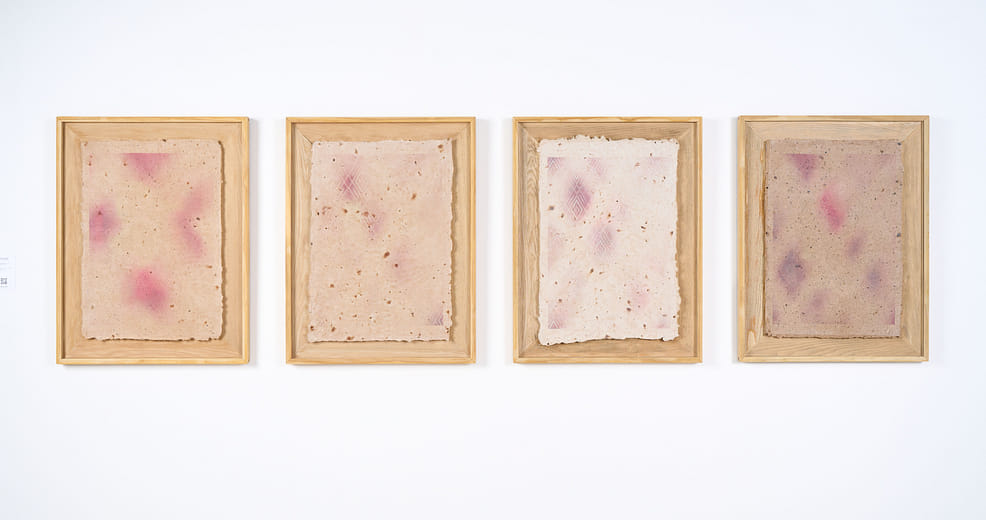
因為版畫對我來說,是相對容易上手且能掌握好的形式。從小在部落長大,「緩慢」的節奏早已成為我的自然狀態,任何太快的媒材我都比較無法掌握;而版畫在落刀之前隨時可以停下來思考,對我來說是最舒服的節奏,只要狀態對了,自然就能把作品做好。除此之外,這組作品除了平面部分是凸版畫,前面裝置的水面也使用了絹印。這種手感的誠實與緩慢,最能對應我創作時的狀態。
Printmaking is a medium I find relatively intuitive and easy to control. Growing up in the tribal community, a slower rhythm became natural to me, and I find fast-paced media harder to work with. In printmaking, I can always pause before making a cut and take time to think, which suits me best. This work combines relief printing with screen printing on the water-like installation in front. The honesty and slowness of these handmade processes closely reflect my state of mind when creating.
當傳統文化、地方記憶或環境議題逐漸被淡忘時,您認為藝術與工藝能扮演什麼樣的角色?
As traditional culture, local memories, or environmental issues fade, what role can art and craft play?
雖然在創作時沒有特別去思考藝術與工藝能扮演什麼宏大的角色,但對我而言,創作就是順著自己的節奏,去把感受到的事物以故事和版畫作為媒介做出來。尊重與順應不同的生活方式,也是我在創作與生活中慢慢體會到的事;如果它能剛好提供一個空間,讓觀者在裡面暫時停下來、呼吸一下,去留意那些平時容易忽略的感受4.當傳統文化、地方記憶或環境議題逐漸被淡忘時,您認為藝術與工藝能扮演什麼樣的角色?藝術與工藝在此扮演的是「當代文化轉譯者」與「生活記憶載體」的角色。透過現代視覺語彙與跨媒材(陶、錫、編織)結合,我們能將原本沉重或傳統的技藝轉化為符合當代審美的生活器物。工藝不應是被封存於歷史博物館的標本,而是應該透過創作重新進入現代人的餐桌。《縱谷盛宴》中工藝品成為一種微型的地方誌(Micro-localism)。使用者在每一次觸碰與使用中,都在無形中完成了對花蓮土地記憶與自然環境的當代認同。,那就很足夠了。
When creating, I do not deliberately think about any grand role that art or craft should play. For me, creation means following my own rhythm and expressing what I feel through stories and printmaking. I have gradually learned to respect and adapt to different ways of living. If the work can simply offer viewers a space to pause, breathe, and notice feelings that are often overlooked, that is already enough. Art and craft can also serve as “contemporary cultural translators” and “carriers of everyday memory.” By combining contemporary visual language with materials such as ceramics, tin, and weaving, traditional techniques can be transformed into objects suited to modern life. Rather than remaining museum specimens, craft can return to the everyday table. In Valley Feast, craft becomes a form of micro-localism, allowing each act of touching and using the objects to reconnect people with the land and environment of Hualien.
這些工藝性的製作過程如何回應作品討論的文化記憶與生態觀?
How do these craft-based processes respond to the cultural memory and ecological perspectives explored in the work?
版畫創作的製作過程本質上就是一種「時間感」的實踐。透過版畫反覆的堆疊與套色,慢慢沉澱出作品想要的狀態;而搭配裝置的空間語彙,更進一步在平面版畫中劃分出「水面上」與「水面下」不同的族群故事與視角。這些製作過程中的刻痕,精準地對應了人與環境、生態之間:那種無法被加速、必須透過緩慢經歷的過程與時間積累,最終體悟出——正如生態有其節奏,人也只需要透過自身的經歷找到回應自己問題的答案。
Printmaking is essentially a practice of time. Through repeated layering and color registration, the work gradually settles into its final state. The installation further divides the print into perspectives “above the water” and “below the water,” revealing different cultural stories. The carved traces reflect the relationship between people and the environment—a process that cannot be rushed, but must be understood through time and experience. Just as ecology has its own rhythm, people must also find their own answers through lived experience.
您認為藝術與工藝能如何幫助傳統文化在當代持續被理解?
How can art and craft help traditional culture continue to be understood today?
藝術與工藝是透過真實感受,選擇適合的媒材或者你能『轉譯』的方式,去詮釋傳統文化中你所領悟的事物。藝術與文化能讓觀者在審美過程中重新感受到歷史的重量,讓傳統成為活生生的、能與現代心靈對話的語彙,而不是遙遠的不適用於此刻的傳說。
Art and craft begin with genuine experience, using suitable materials and forms of “translation” to express what we have understood from traditional culture. Through aesthetic experience, viewers can once again feel the weight of history, allowing tradition to become a living language that speaks to contemporary minds rather than a distant story disconnected from the present.